
The Creative Traveller’s Guide to Toronto: 4 Days of Art, Design and Food
From cutting-edge galleries and design-led hotels to Michelin-worthy dining and neighbourhoods buzzing long after dark, Toronto rewards travellers who follow creativity wherever it leads.
From cutting-edge galleries and design-led hotels to Michelin-worthy dining and neighbourhoods buzzing long after dark, Toronto rewards travellers who follow creativity wherever it leads.
Four days in Toronto gives creative travellers enough time to explore the galleries and restaurants of Queen West, the multicultural streets of Kensington Market and Chinatown, Riverdale’s understated dining scene and some of the city’s most interesting art-led hotels. This itinerary brings together contemporary art, neighbourhood culture, design, food and nightlife without turning the trip into a race between landmarks.
Toronto thrives on creative collisions. Art meets hospitality, architecture meets food and neighbourhoods become cultural playgrounds where every corner offers another discovery.
While Nuit Blanche transforms the city into an overnight spectacle of installations and performances each autumn, that spirit of curiosity and reinvention is woven into everyday life.
Spend four days here and you will discover a city where contemporary art spills from hotel corridors, restaurants are as carefully designed as the menus they serve and every neighbourhood tells a different story through food, architecture and the people who call it home. It is less about ticking off landmarks and more about immersing yourself in a place that is constantly reinventing itself.
Toronto creative city break at a glance
Best for: Contemporary art, design, independent food and neighbourhood culture
Recommended stay: Four days
Where to stay: Queen West
Hotel featured: The Drake Hotel
Areas covered: Queen West, Kensington Market, Chinatown, Ossington and Riverdale
Trip style: A cultural city break with food, cocktails and nightlife
Best time for major art events: Spring or autumn
Getting from the airport: UP Express from Toronto Pearson to Union Station
Is Toronto good for art and design lovers?
Toronto is particularly rewarding for art and design travellers because its creative life is not confined to the major institutions. It can be found in independent galleries, hotel corridors, street art, food halls, restaurants and shops spread across a collection of distinctive neighbourhoods.
Queen West offers an ideal introduction, combining contemporary art, live music, design-conscious hotels, independent businesses and a strong food and drink scene. Kensington Market, Chinatown, Ossington and Riverdale each reveal a different side of Toronto’s cultural identity.
Four days is a good amount of time for a first creative trip. It allows you to visit the Art Gallery of Ontario and several smaller galleries, explore different neighbourhoods and experience the city after dark without compressing everything into a single weekend.
Planning your trip?
Compare flights to Toronto here.
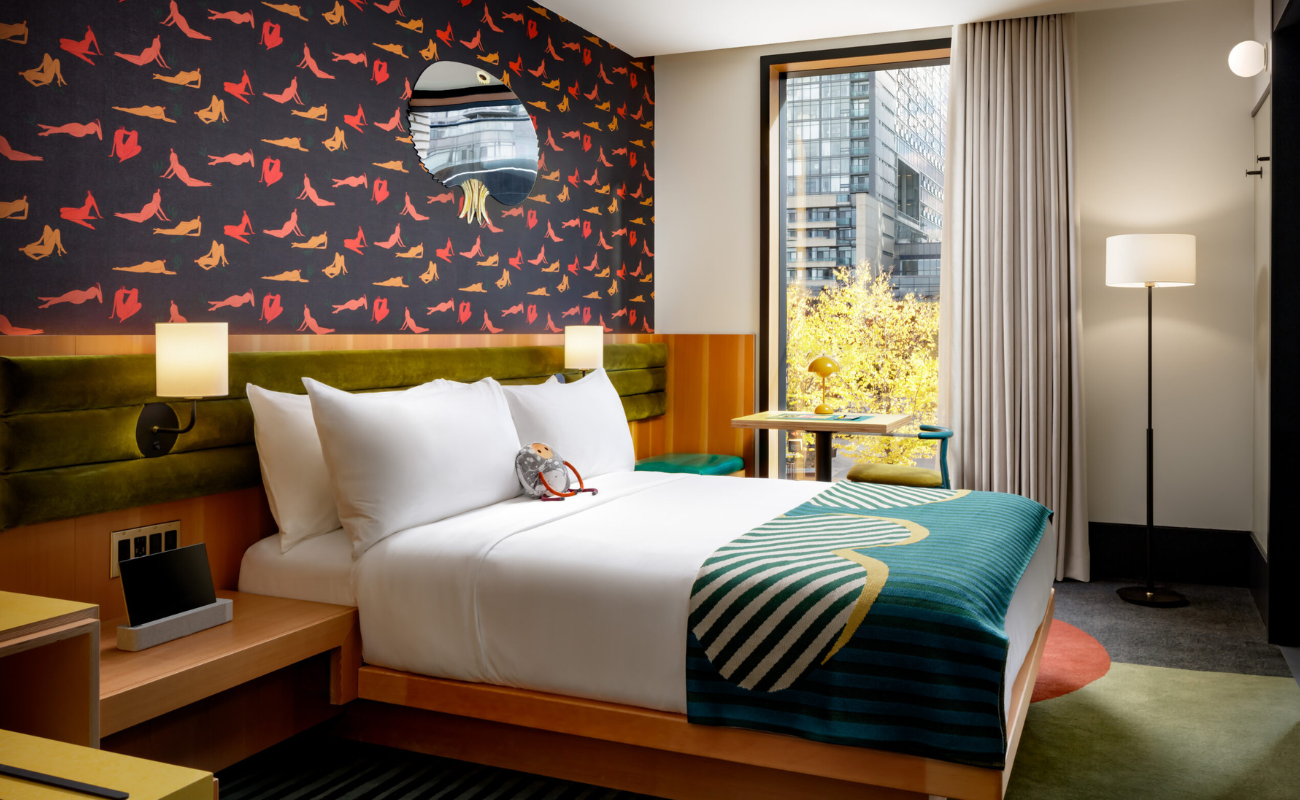
Queen room at The Drake - compact but playfully stylish
Day 1: Check into Toronto’s creative west side
Stay where art comes first at The Drake Hotel
Touch down at Pearson Airport, hop aboard the efficient UP Express into downtown and make your way to The Drake Hotel in Queen West, the neighbourhood that has become the city's creative heartbeat.
The Drake is more than somewhere to sleep. Corridors double as gallery spaces, the lobby shifts effortlessly between exhibition venue and social hub, and live music from the Drake Underground drifts through the building after dark. Rooms are compact but thoughtfully designed, attracting a mix of artists, musicians and culturally curious travellers who appreciate a hotel that treats creativity as part of the guest experience rather than decoration.
Who should stay at The Drake Hotel?
The Drake is best for travellers who want to be surrounded by art, nightlife and neighbourhood energy. It may be less suitable for those seeking large rooms, a quiet resort atmosphere or a conventional luxury hotel experience.
Our verdict
Stay here for the personality, art collection, live music and Queen West location. The rooms may be compact but the hotel places you directly inside Toronto’s creative scene rather than simply giving you a base from which to observe it.
Check current prices at The Drake hotel here.
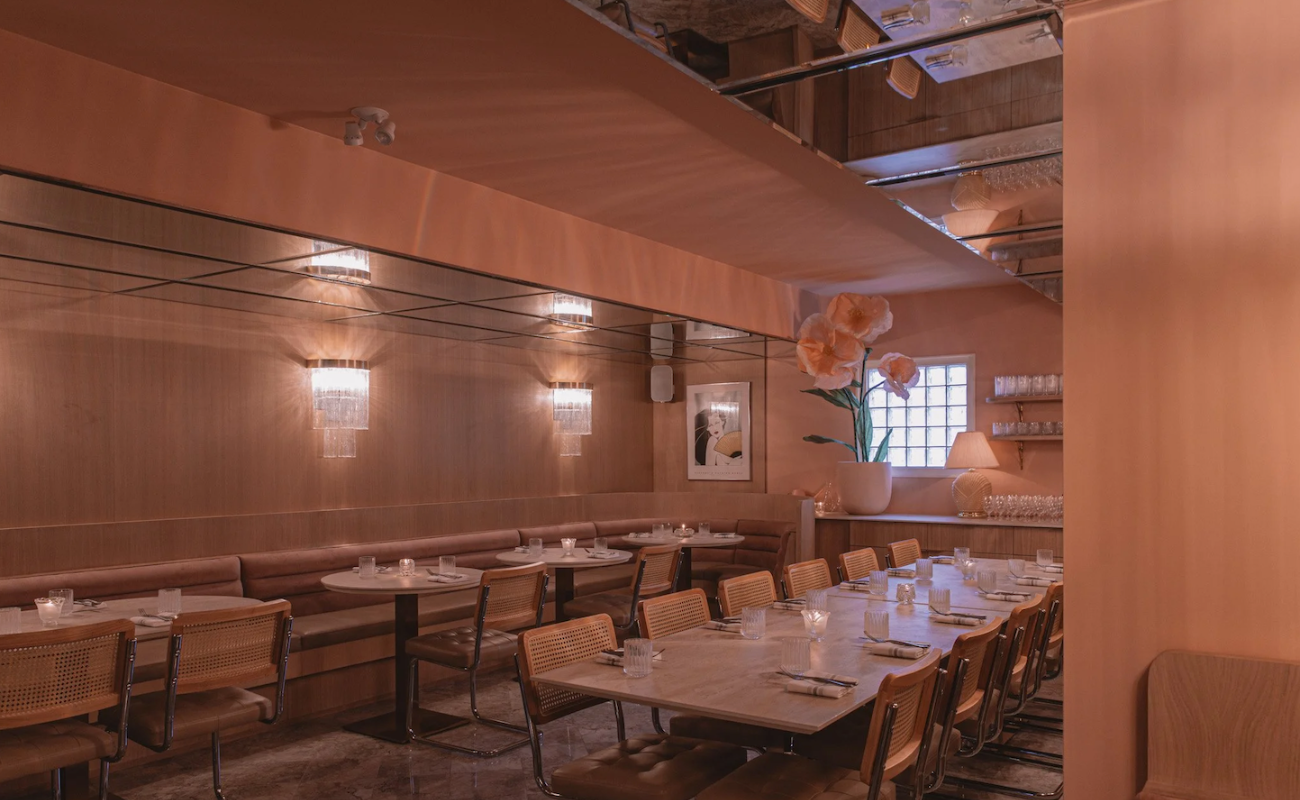
Upstairs at General Public
Dinner at General Public - A Dining Scene Built on Bold Ideas
Toronto's culinary identity mirrors its population, drawing inspiration from across the globe while refusing to be confined by tradition.
At General Public, restaurateur Jenn Agg has created a restaurant that balances nostalgia with invention. Downstairs evokes a reimagined British pub in deep green tones, while upstairs softens into playful 1980s-inspired interiors. Cocktails arrive first, including a memorable Thai Margarita combining tom yum-infused tequila, Thai basil, lime and fish sauce into something unexpectedly harmonious.
The menu follows the same philosophy. Familiar dishes are nudged into new territory, with Welsh rarebit elevated by Guinness and oysters, creating combinations that feel surprising without becoming gimmicky. Packed tables on a weekday evening suggest the formula is working.
Day 2: Explore the art and architecture of Queen West
Discover The Drake Hotel’s collection
Toronto's art scene is vast, but Queen West offers the perfect place to begin exploring it.
Breakfast at the Drake Café is followed naturally by wandering through the hotel's own collection. Large-scale installations sit alongside more intimate works tucked into corridors and corners, with each floor offering a different perspective. Nova Scotia artist Leah Phillips' Liminal Lilly, an enormous pink flower punctuated with eyeballs, immediately catches attention in the lobby, while Sarah Alinia Ziazi's reflective acrylic mirror pieces transform with every step you take.
Visit Paul Petro Contemporary Art
Just a few minutes away, Paul Petro Contemporary Art provides a quieter counterpoint. The gallery has quietly shaped Toronto's art scene for decades, presenting painting, photography and sculpture alongside approachable editions that encourage visitors to begin collecting rather than simply observing.

Installation at United Contemporary
See what is next at United Contemporary
Nearby, United Contemporary feels entirely focused on the future. Its collaborative programme places exhibitions in conversation with one another, creating a gallery experience that rewards curiosity and time rather than quick consumption. Together, these spaces offer an insight into where contemporary Canadian art is heading.
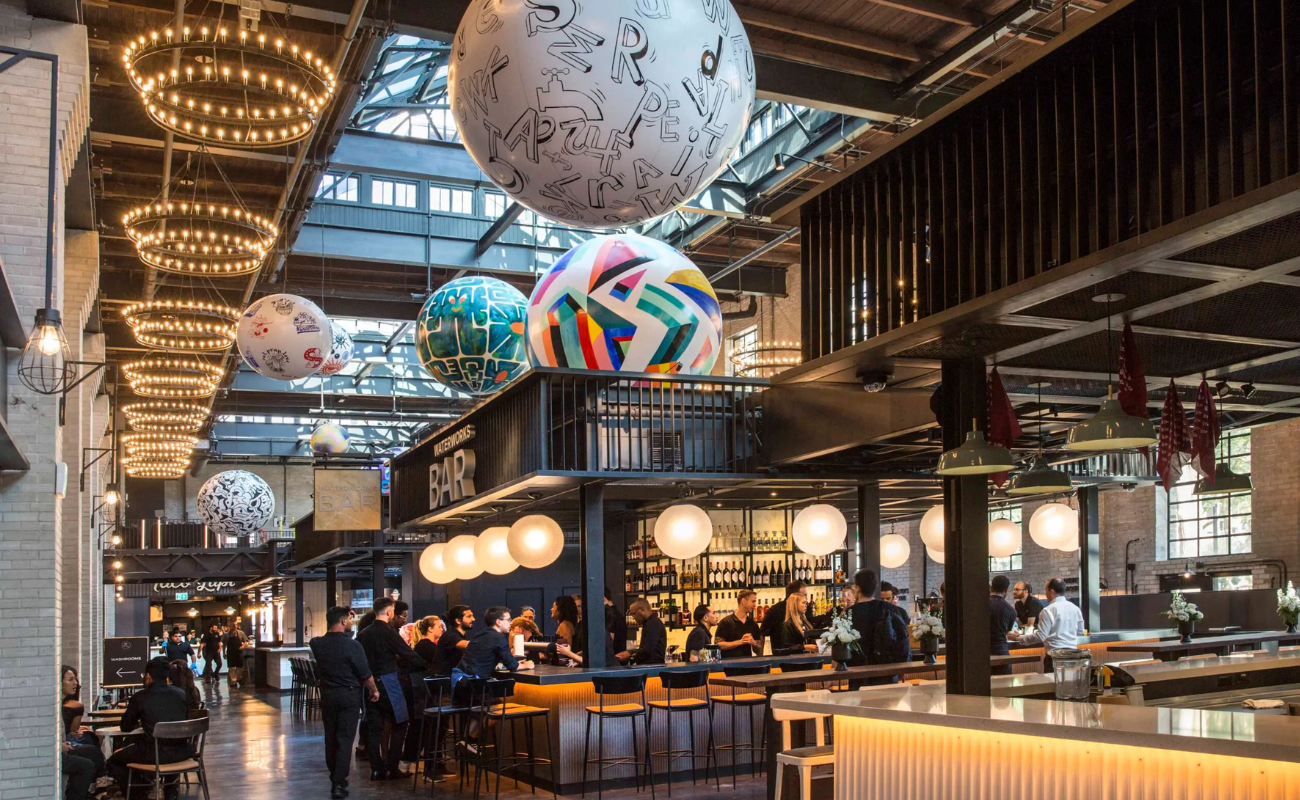
Waterworks Food Hall
Lunch Beneath Floating Installations at Waterworks Food Hall
Waterworks Food Hall occupies a beautifully restored industrial building where Japanese, Thai, Caribbean and local vendors sit beneath glowing suspended artworks.
The atmosphere is every bit as appealing as the food, making it an ideal pause before continuing your exploration. It also demonstrates how successfully Toronto blends heritage architecture, contemporary design and an international food culture.
Spend the rest of the afternoon exploring Queen West’s independent shops, street art and cafés before returning to The Drake or continuing into the surrounding neighbourhood.
Sophisticated Evenings in Riverdale
Cross the city to Riverdale for dinner at Wynona, the understated Italian restaurant whose Michelin Bib Gourmand recognition feels entirely deserved. The menu is intentionally concise, allowing every dish to shine, while the "Trust Us" tasting menu removes decision-making altogether. The delicate Branzino is a highlight, accompanied by biodynamic wines and sparkling teas served within pale Scandinavian-inspired interiors.
Later, climb the stairs above Café Renée to discover Charlemagne, one of Toronto's best-kept secrets. Candlelight, jazz and expertly crafted cocktails create a distinctly Parisian atmosphere, while chef Nick Liu's dumplings provide the perfect accompaniment to an evening that feels hidden away from the rest of the city.
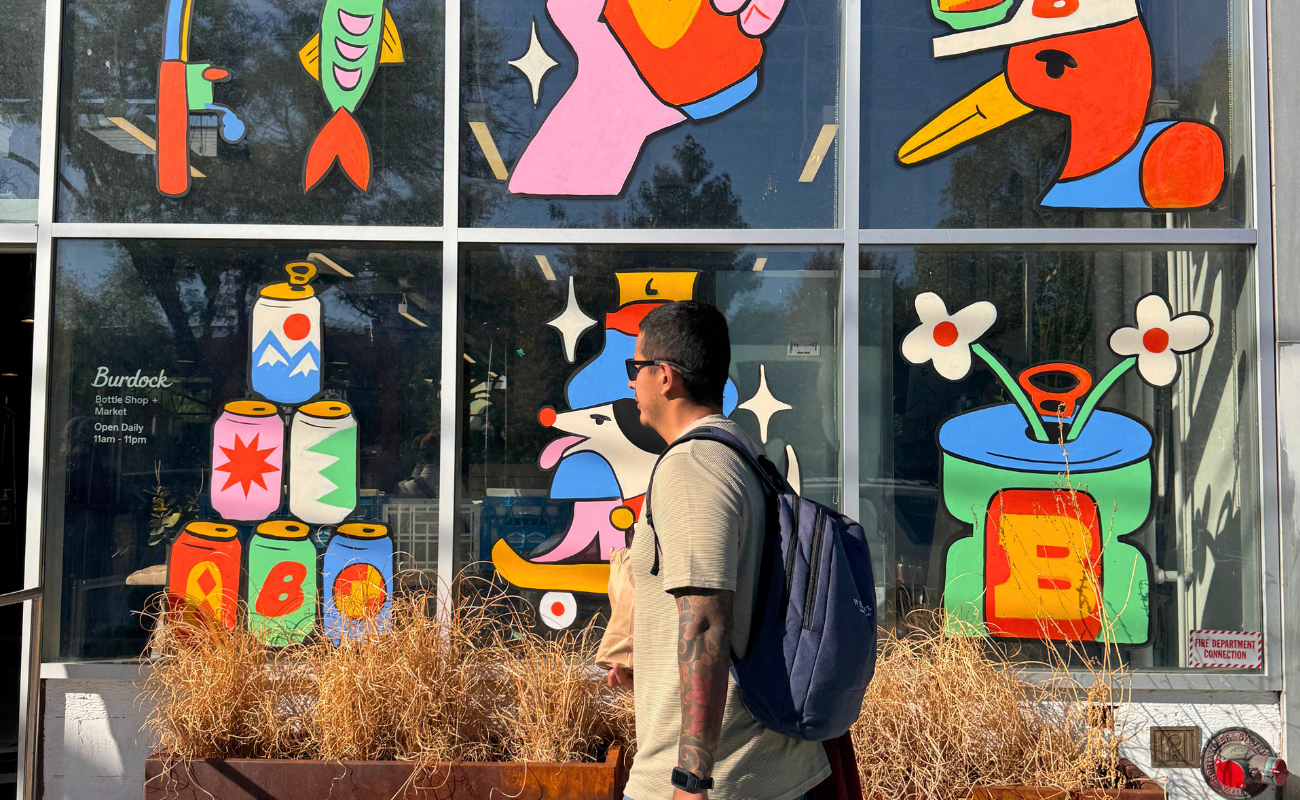
Indie brewery Burdock offers up some great tasting beers
Day 3: Kensington Market, Chinatown and Ossington after dark
Discover the city through food
Toronto's identity is written through its neighbourhoods as much as its institutions.
Nowhere is that clearer than Kensington Market and Chinatown, where migration, culture and food intersect on every corner. A guided food tour introduces Vietnamese snacks, Jamaican patties and steaming dim sum while sharing the stories behind the communities that shaped them. The experience becomes less about eating and more about understanding the city itself.
Afterwards, lose yourself among Kensington's graffiti-covered laneways, vintage stores, and independent cafés where music spills onto the pavements and every block feels slightly different from the last.
Stop for a drink at Burdock Brewery
Nearby, Burdock Brewery provides a welcome pause with small-batch beers ranging from crisp lagers to more experimental pours served in an atmosphere that is relaxed and refreshingly unpretentious. It is the kind of place that feels connected to its neighbourhood rather than designed exclusively for visitors.
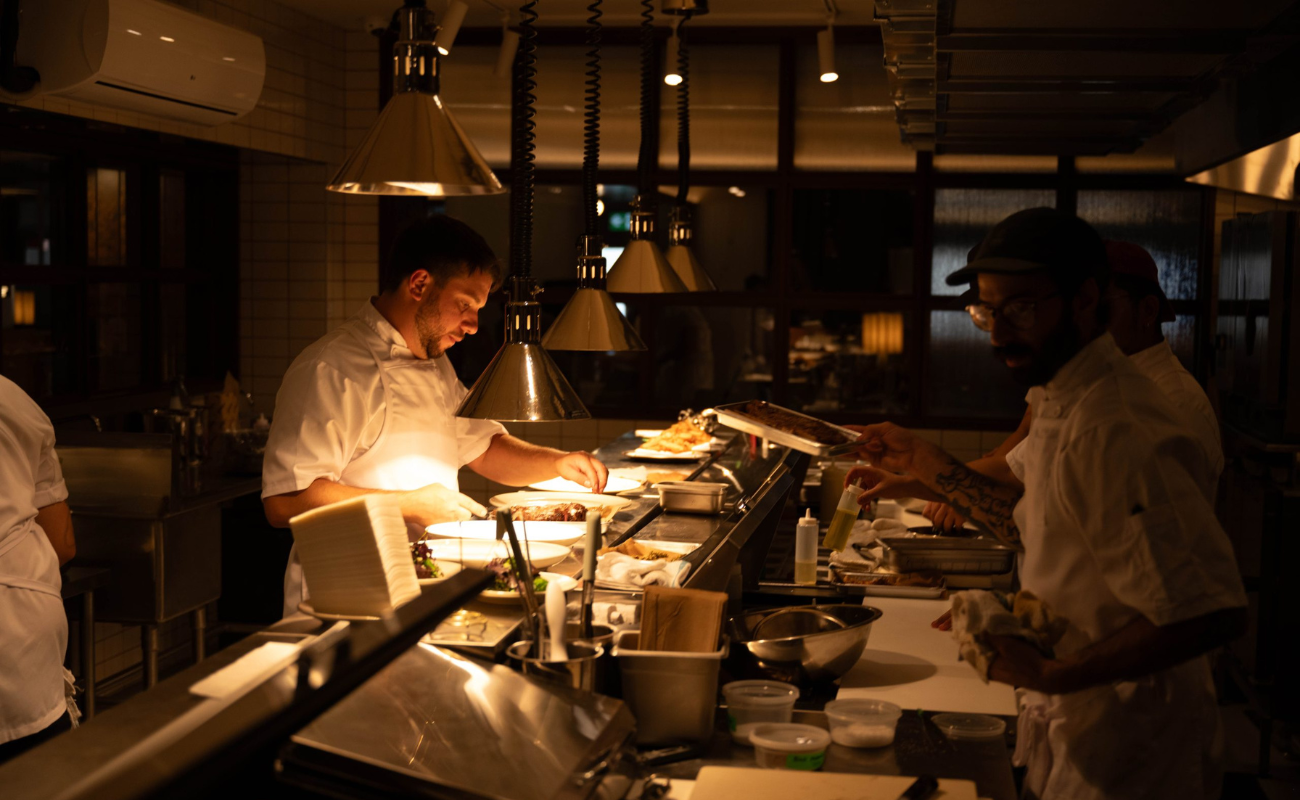
Linny’s is a must-stop for incredible food
Dinner at Linny’s
As evening falls, Ossington demonstrates why Toronto's nightlife deserves as much attention as its galleries.
Linny's blends the nostalgia of a Jewish deli with the polish of a contemporary steakhouse. Horseradish martinis, aged beef and jazz records provide the backdrop while warm challah arrives alongside fresh cheese and jam before meals that make returning to Toronto feel inevitable.
Karaoke and cocktails at Bar Mordecai
Just around the corner, Bar Mordecai offers an entirely different experience. Private karaoke rooms, excellent cocktails and an infectious atmosphere turn strangers into performers and provide the perfect finale to a day spent exploring the city.
Day 4: A Final Dose of Culture, major art and the waterfront
Visit the Art Gallery of Ontario
No visit feels complete without spending time at the Art Gallery of Ontario. Frank Gehry's architectural intervention guides visitors through collections that move seamlessly between Canadian, Indigenous and international works, creating a narrative that feels both rooted and outward-looking. The AGO provides a useful contrast to Toronto’s smaller independent galleries. Together they reveal both the institutional scale and grassroots energy of the city’s art scene.
Allow several hours if you want to explore the collection properly and check the current exhibition programme before travelling.
Finish beside Lake Ontario
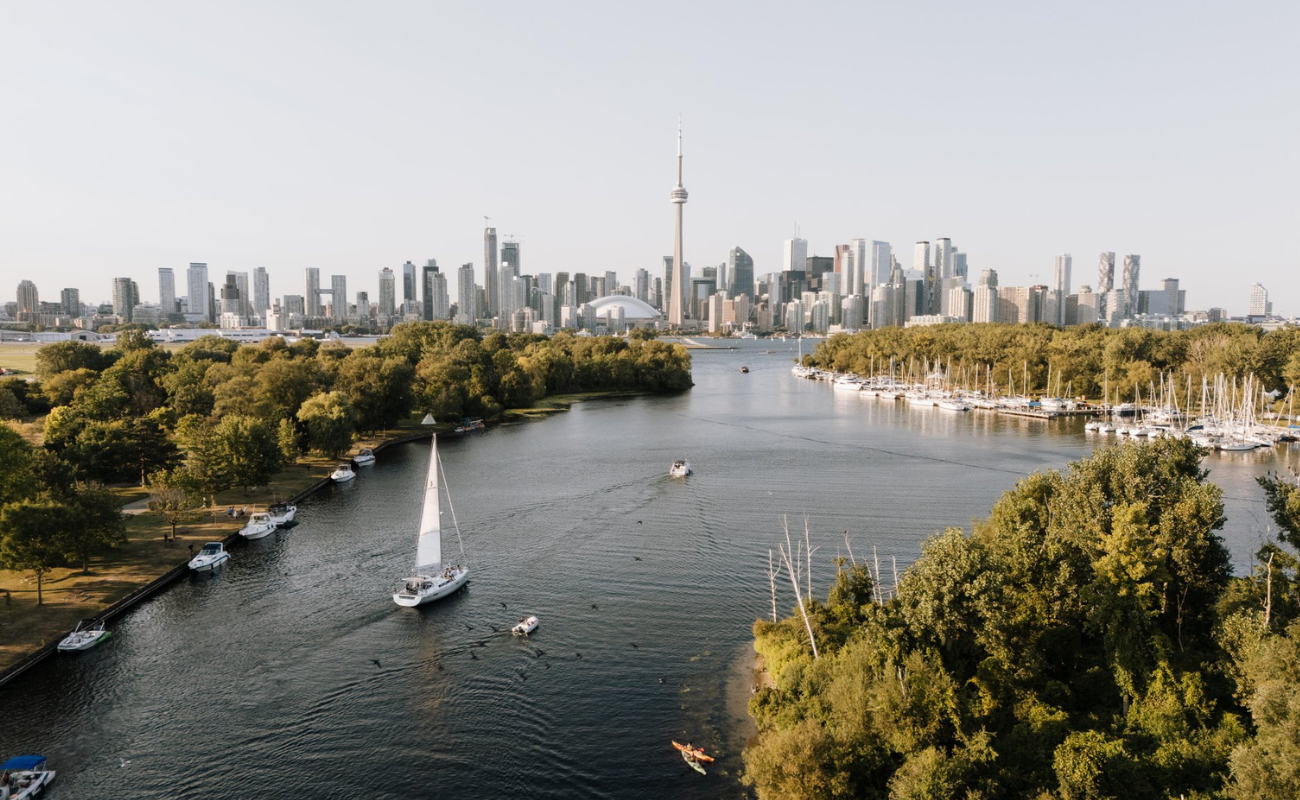
If time allows before departure, take a walk along the waterfront or board a boat across Lake Ontario (pictured top). As the skyline recedes, Toronto reveals another side of itself, quieter, greener and every bit as compelling as the vibrant neighbourhoods left behind.
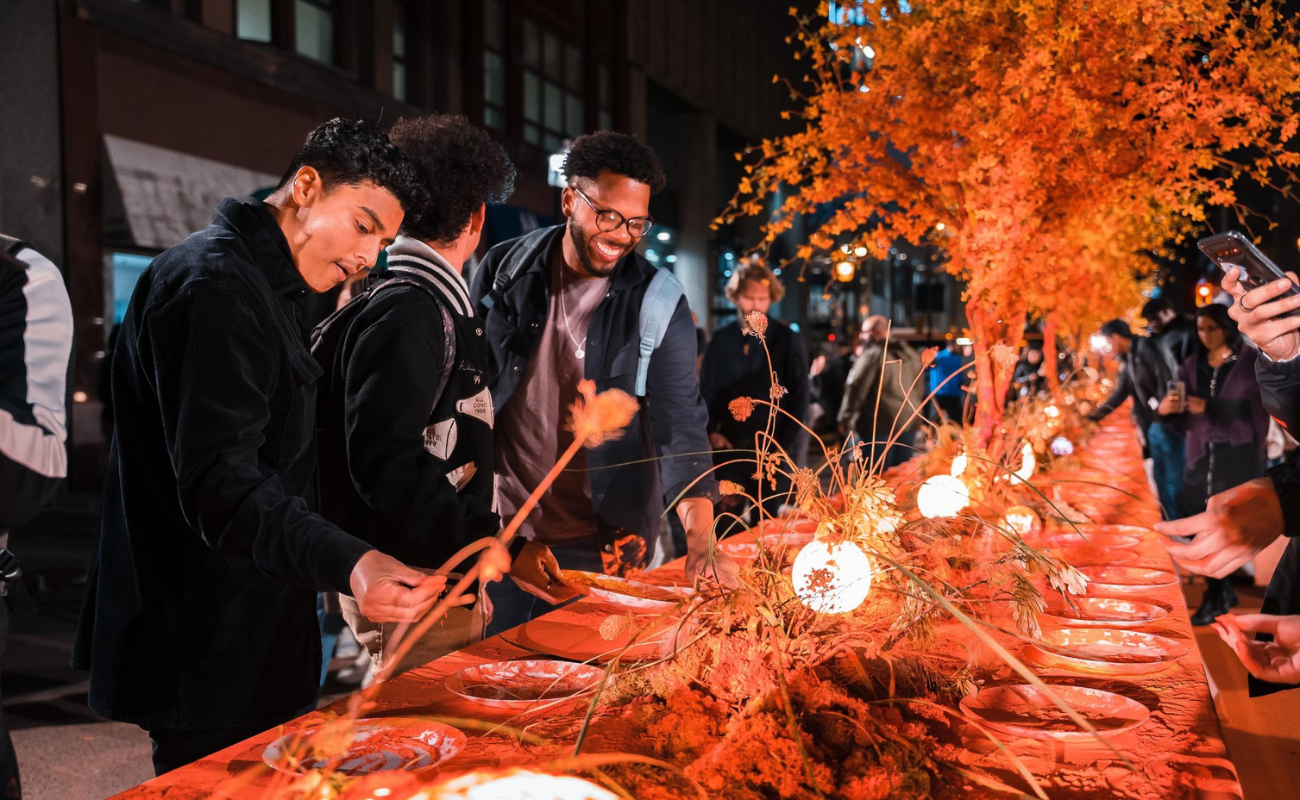
Nuit Blanche - the all-night celebration of art
When to Visit
Autumn is an especially rewarding time to experience the city. The Toronto Biennial fills venues across the city with ambitious contemporary art while Nuit Blanche transforms streets into one vast overnight exhibition where installations, performances and projections unfold until dawn.
During late Spring, the Contact Photography Festival brings another creative dimension, filling galleries and public spaces with one of the world's largest celebrations of lens-based art.
Toronto doesn't announce itself with grand gestures. Instead, it reveals its character slowly through conversations, neighbourhoods, meals and unexpected discoveries, rewarding travellers willing to follow curiosity rather than an itinerary.
For information and festival dates see Destination Toronto.
GETTING THERE
Air Transat – voted World’s Best Leisure Airline 2025 by Skytrax - offers direct flights to Toronto year-round from London Gatwick, Manchester, and Glasgow, plus a seasonal service from Dublin. Return Economy Class fares start from £407 pp. Book now at airtransat.com.
72 hours in Dubai: A Cultural and Creative Escape
In just three days, Dubai reveals its depth: contemporary art in converted warehouses, centuries-old heritage districts, desert rituals reborn for a new generation, and a culinary scene shaped by global influences.
Dubai’s reputation for superlatives is well known, glittering skyscrapers, desert luxury, and five-star everything, but beneath the gloss lies a city powered by creativity and cultural ambition. In just three days, Dubai reveals its depth: contemporary art in converted warehouses, centuries-old heritage districts, desert rituals reborn for a new generation, and a culinary scene shaped by global influences. This is a city where art, design, and tradition intersect and where a short stay can feel like a deep cultural dive.
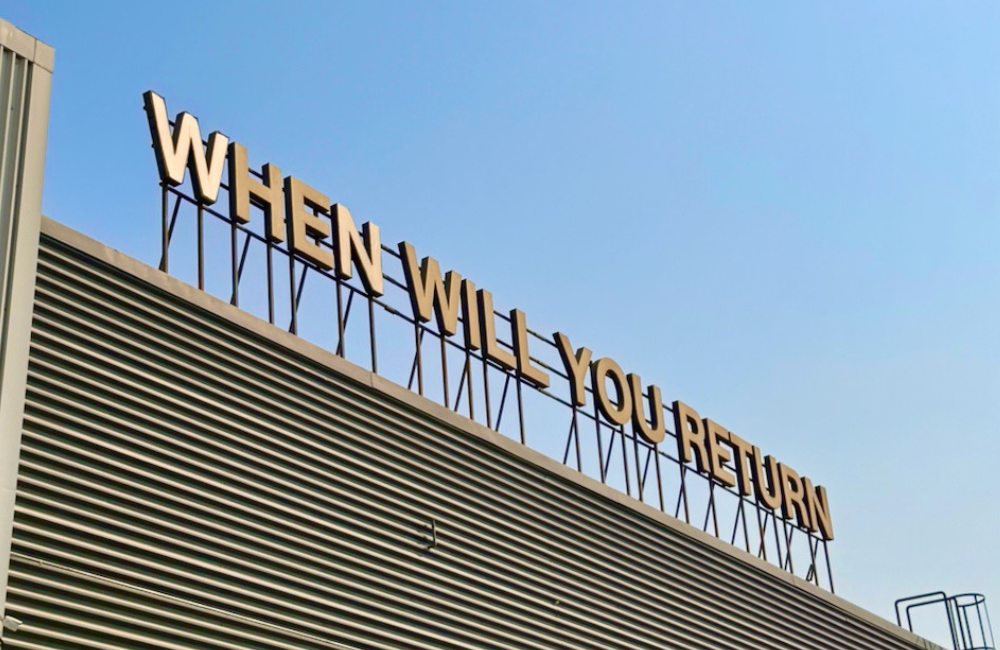
Alserkal Avenue
Day 1: Contemporary Dubai – The Art of the City
Alserkal Avenue
Start your exploration in Al Quoz, Dubai’s creative heart. Alserkal Avenue, once a cluster of factories, now beats with contemporary art, design studios and experimental installations. Step into Concrete, a minimalist, adaptable gallery designed by Rem Koolhaas’ OMA, and wander through over 70 spaces from Ayyam Gallery to The Third Line. Pop into A4 Space to meet artists or stumble upon large-scale works such as Mary Ellen Carroll’s The Circle Game.
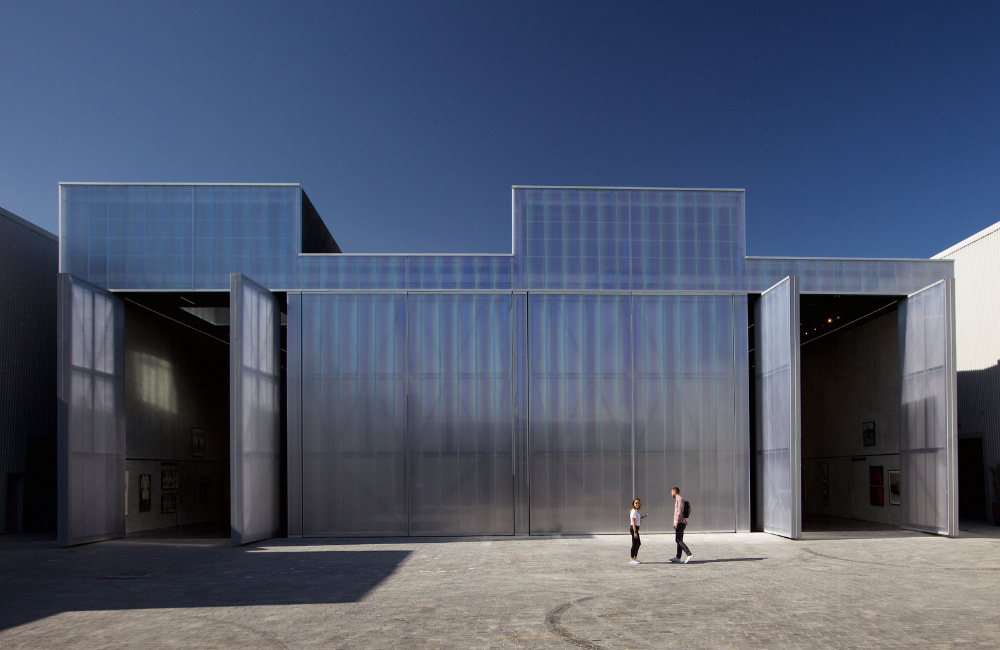
Concrete
Al Khayat Art Avenue
Nearby, the up-and-coming Al Khayat Art Avenue mirrors that same spirit of reinvention. Discover Efie Gallery, a leading space for African contemporary art, and Inloco Open Storage, a shimmering gold container showcasing emerging regional talent.
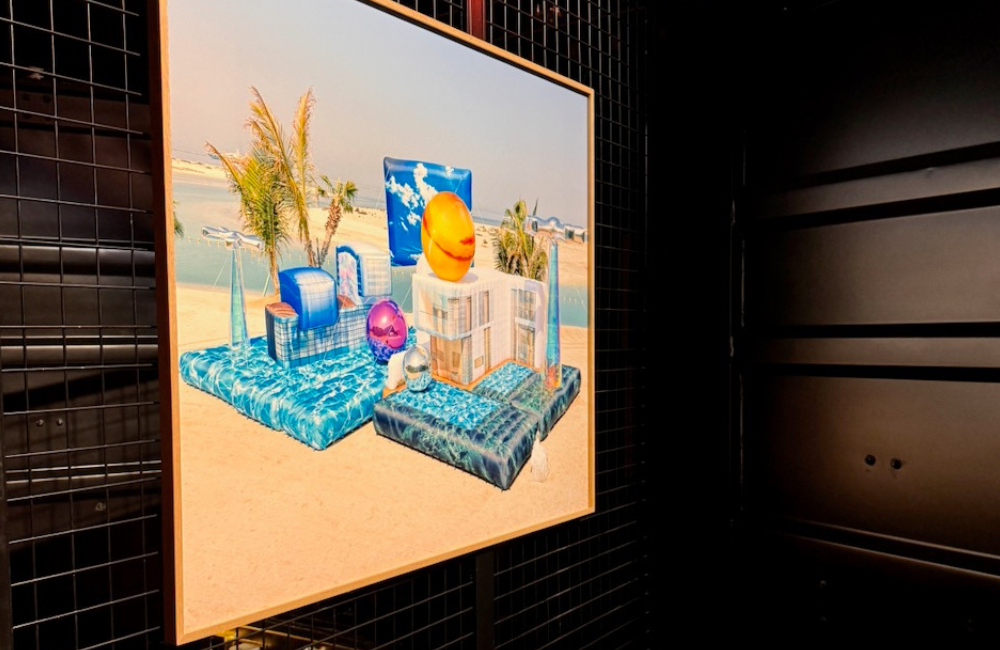
Inloco Open Storage
Refuel at Nightjar Coffee Roasters
Part café, part creative community, Nightjar Coffee Roasters is a must for design lovers and caffeine purists. Expect small-batch brews, vinyl playlists, and merch so well-designed it deserves wall space.
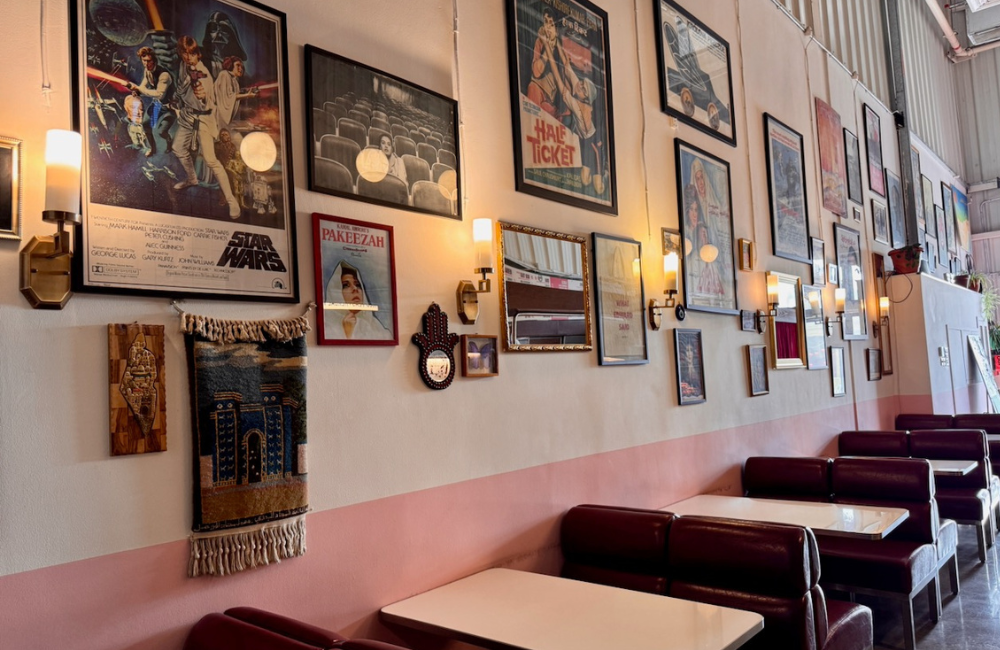
Cinema & Design Stroll - Round off the afternoon browsing Waddington Custot for modern masterpieces and concept stores for one-off design finds. Then catch an indie screening at Cinema Akil, the retro arthouse cinema furnished with rescued décor from old Dubai theatres. Inside, Project Chaiwala serves the city’s most talked-about chai.
Dinner at Lila Molino - End the day at Lila Molino in Warehouse 18. Shaw Lash’s Mexican menu celebrates authenticity and spice; the Chicken & Green Chile Tacos with a tangy Lila-Chelada are unmissable.
Nightcap at Mercury Rooftop - Toast your first evening with skyline views at Mercury Rooftop, an elegant spot suspended between the sea and the city lights.
Day 2: Heritage and Horizons
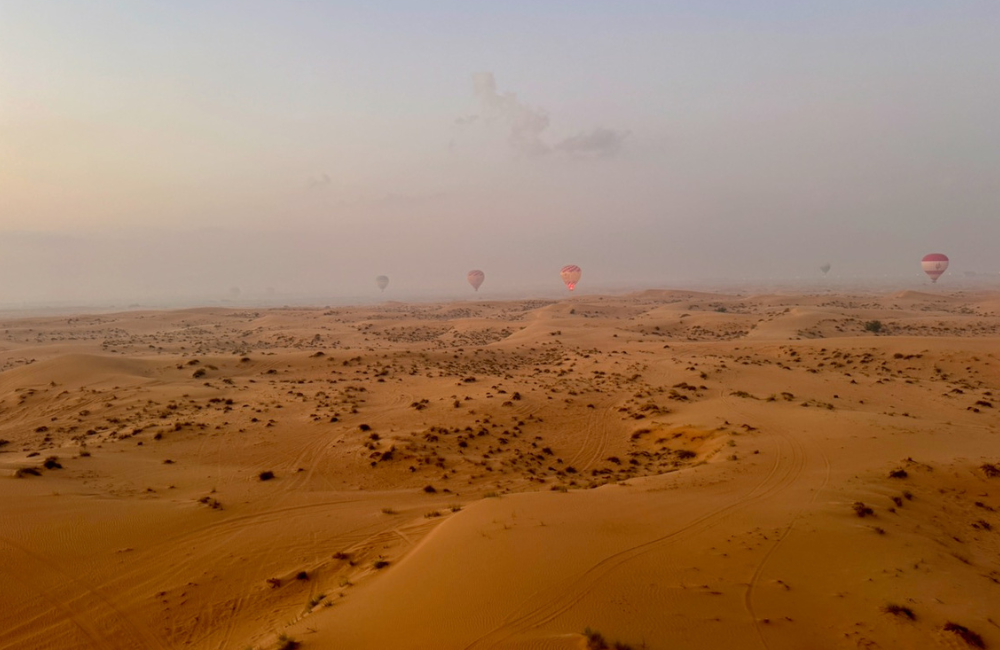
Sunrise with Hero Balloons Dubai
Wake early for a flight of a lifetime over the Dubai Desert Conservation Reserve. Watch dawn break across the dunes as a falcon performs mid-air displays beside your balloon, a breathtaking nod to Emirati heritage. After landing, a Michelin-quality breakfast awaits at a Royal Desert Retreat, complete with local produce and panoramic calm.
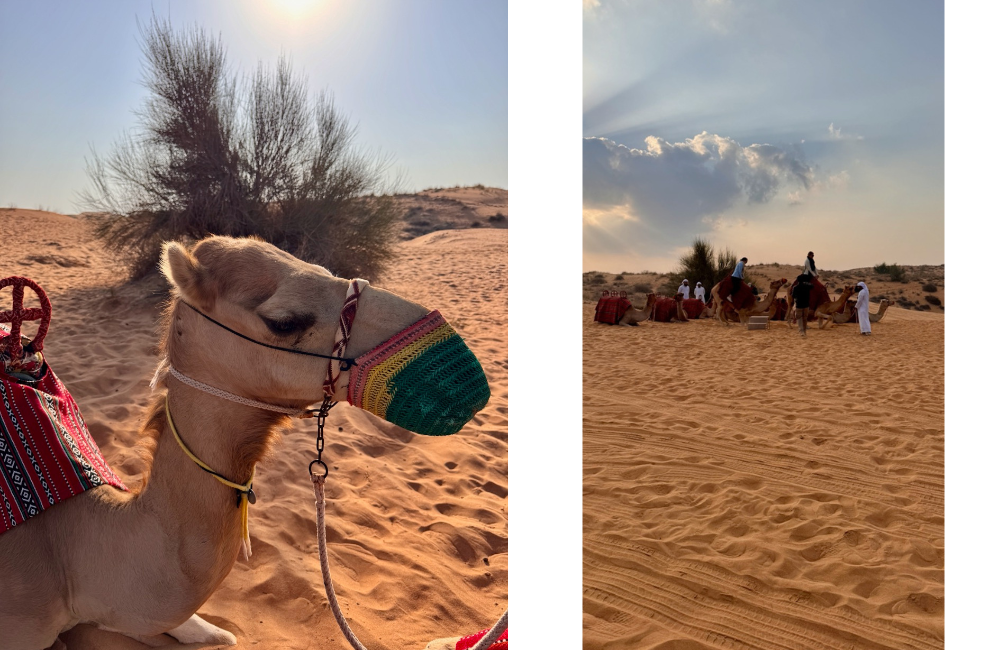
Head to the Dunes
Camel Ride Across the Dunes
Continue your desert immersion with a camel trek led by Bedouin guides. The ride offers insight into Dubai’s nomadic roots, and a reminder that grace (and grip) are required to dismount elegantly.
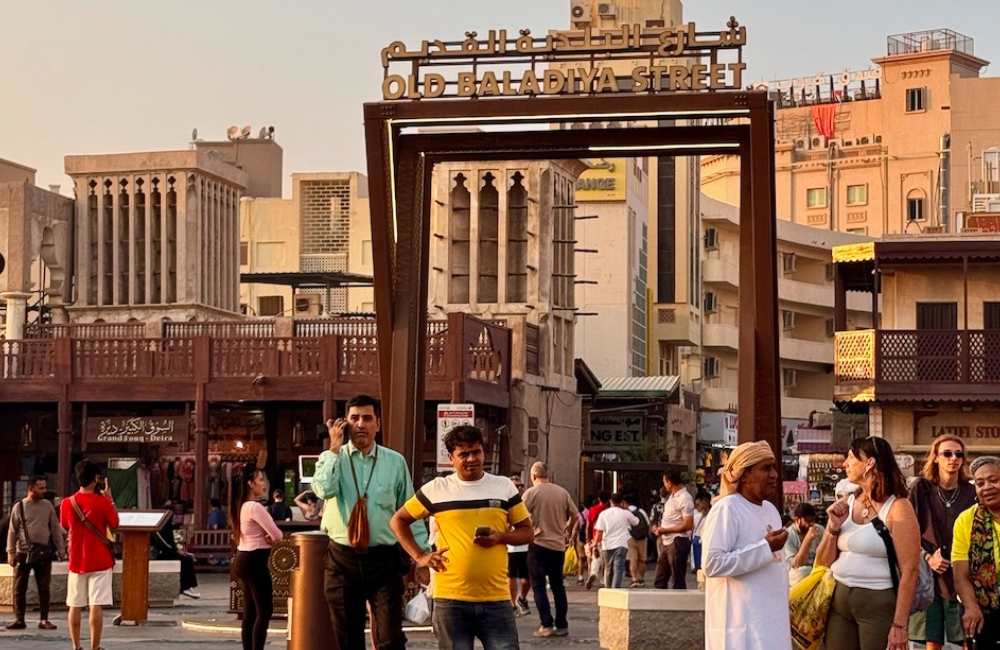
Old Baladiya Street in Deira
Deira Food Trail
Back in the city, head to Old Baladiya Street in Deira. Wander the spice-scented alleys, stopping at Al Khayma Heritage Restaurant, recognised by the Michelin Guide for authentic Emirati cuisine. Don’t miss Camel Milk Gelato with saffron and pistachio (a Dubai original) and shop for dates, Arabic sweets, and fragrant saffron before the day ends.
Day 3: Wellness and Waterfront
Banyan Tree Spa, Bluewaters Island
Trade desert heat for hydrotherapy calm at Banyan Tree Spa. The Rainforest Experience blends saunas, steam, and plunge pools, while the sound-healing sessions use singing bowls to rebalance body and mind. Perfect after two packed days.
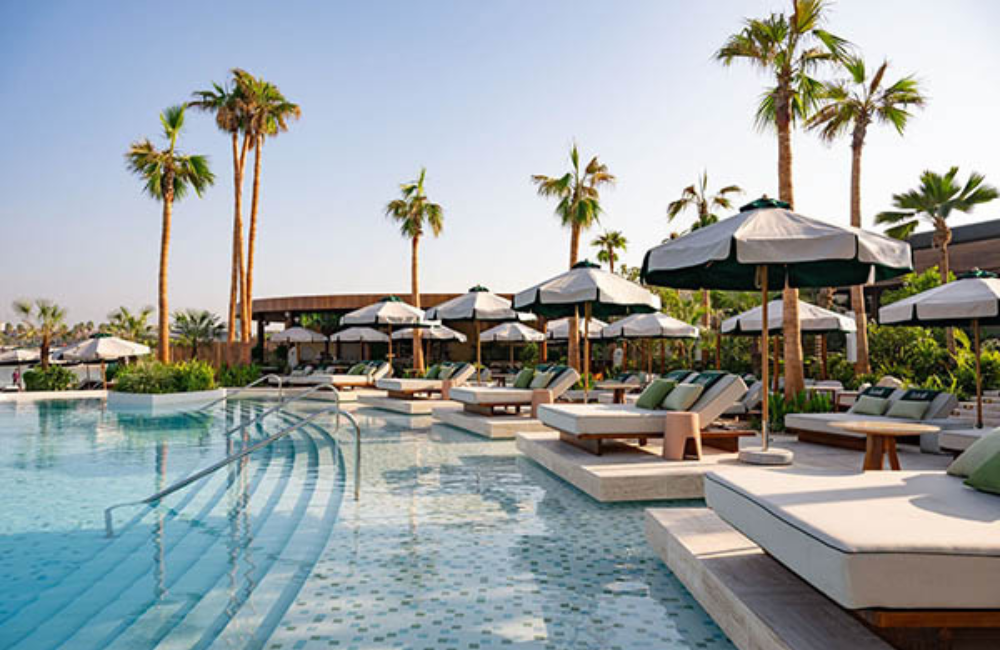
Bâoli Dubai
Afternoon at Bâoli Dubai
Next, embrace the city’s beachside energy at Bâoli Dubai, the French Riviera-inspired beach club where Mediterranean dishes meet East Asian flair. The poolside scene is stylish yet laid-back. A place to sip, swim, and people-watch to a curated soundtrack.
Dinner at Sea Fu
Back at the Four Seasons, Sea Fu offers the ideal finale: Asian-inspired seafood against an ocean backdrop. The Soy-Marinated Black Cod with Miso Aubergine and Yuzu defines Dubai’s culinary artistry; refined, global and unforgettable.
Stay: Four Seasons Resort Dubai at Jumeirah Beach
Begin in quiet luxury between the Arabian Gulf and the city skyline. The Four Seasons’ Premier Sea-View Rooms frame turquoise horizons, while its restaurants, Sea Fu for refined Far East flavours and Hendricks Bar for gin-infused nightcaps, set a serene tone for your stay.
Getting there: Fused flew direct to Dubai with Emirates. For flight information, visit emirates.com.
Best time to visit: November to March, when temperatures hover between 24–28°C.
More information: Visit Dubai

Siem Reap Reimagined
Siem Reap is redefining luxury, proving that responsible tourism and authentic experiences can transform a city, uplifting both visitors and locals alike.
Siem Reap is redefining luxury, proving that responsible tourism and authentic experiences can transform a city, uplifting both visitors and locals alike.

There’s a common thread of conversation in Siem Reap’s bars, restaurants, and hotels when you ask, “How’s business?” The answer is often, “a little slow still.” While tourism numbers have been steadily rising across Southeast Asia post-pandemic, Cambodia has been slower to see a full recovery. The country’s visitor numbers, while improving, are still lagging behind pre-pandemic figures by nearly 20%.
This slower pace comes despite the recent unveiling of the new Siem Reap-Angkor International Airport. Funded by China and located about an hour from the city (a considerable increase from the 10-minute journey from the old airport), it was built to accommodate the anticipated surge in long-haul international arrivals. However, direct flights, especially from places like the UK, remain elusive for now.
What makes Siem Reap even more compelling in this period of recovery is the strong sense of community that’s driving the local economy forward. Behind this push are local hoteliers, General Managers, and tour providers who are committed to ensuring the city’s growth is both sustainable and beneficial to Cambodians. These visionaries are focused on building a robust infrastructure that not only enhances the visitor experience but also supports local workers with better-paid jobs and increased security. Their efforts are helping to re-establish Siem Reap as a destination where culture, history, and responsible tourism coexist, offering travellers an authentic and meaningful experience while uplifting the community.
This dynamic atmosphere makes it an exciting time to visit Siem Reap, where you can witness firsthand the city’s revitalisation and feel the collective energy of a community dedicated to shaping a brighter future.
One of the people leading the charge is the enigmatic Managing Director of the multi-award-winning Jaya House Riverside Park, Christian de Boer. Under de Boer’s leadership, Jaya House has cultivated a reputation for responsible luxury, positioning itself as a steward of sustainable travel in Cambodia. His initiatives extend well beyond eco-friendly practices; the hotel actively supports local causes, from the ‘Refill Not Landfill’ campaign to combat plastic waste, to community projects with NGOs like the Green Gecko Center for Street Children. De Boer’s vision is clear: to leave a positive footprint, encouraging guests to support projects that impact local lives.
Amid a shifting tourism landscape in Southeast Asia, Jaya House stands out for its dedication to quality and social impact. “As travel rebounds, we’re increasingly aware of our role in minimising tourism’s ecological footprint,” says de Boer. “Our recognition as Cambodia’s top hotel for six years is a privilege, but our mission to support local welfare and sustainable practices is our driving force.”
Guests are invited to join these efforts by donating educational books for local children or contributing directly to the hotel’s NGO partnerships. Jaya House’s approach to sustainability is grounded in tangible actions, reminding visitors that luxury and responsibility can—and should—coexist.

Stepping into Jaya House you’ll see plenty of natural materials combined to deliver stylish interiors throughout
Named one of the Top 25 Hotels in the World for six years running, this boutique haven sets a high bar for hospitality with an emphasis on sustainability. For the environmentally conscious traveller, Jaya House offers more than just a stay. As guests step into the property, they’re met with a celebration of Cambodia’s 1960s Modernism, from art deco-inspired facades to interiors accented with locally sourced wood and stone. The hotel’s 36 guest rooms each feature contemporary Khmer touches. While, the corridors are adorned with artwork by students from the Siem Reap Art School, fostering a cultural connection and offering a platform for emerging local talent.
Beyond design, Jaya House’s service is nothing short of exceptional. The concierge team goes to great lengths to tailor experiences, arranging private temple tours and hikes through Cambodia’s lush landscapes.

One of the pool rooms at Jaya House
In addition to personalised service, Jaya House offers amenities that elevate the guest experience. Each room includes a complimentary tuk-tuk service for exploring Siem Reap’s vibrant streets, a daily-refilled minibar, and unlimited laundry services. There’s also a local mobile phone provided for easy communication—ideal for a seamless return after a day spent navigating temples or markets. The complimentary daily spa treatments, however, are perhaps the hotel’s most coveted offering. From invigorating Khmer massages to calming aromatherapy, the spa’s treatments provide the perfect antidote to a day of exploration.

Get the insider guide with Akim Ly

Art, Culture and the Quirky Charms of Pittsburgh
Pittsburgh, Pennsylvania—known for its industrial roots, die-hard sports culture, and the iconic 446 bridges spanning its rivers—is quietly reinventing itself.
Pittsburgh, Pennsylvania—known for its industrial roots, die-hard sports culture, and the iconic 446 bridges spanning its rivers—is quietly reinventing itself. Beyond the steel and stadiums, a lively creative scene is flourishing, blending pop art quirks, pickle festivals, and a unique, down-to-earth unpretentious charm.
Pittsburgh’s appeal is multifaceted. For those seeking natural beauty, the city offers stunning river views and green spaces interwoven through its hills and valleys. For foodies, Pittsburgh boasts a booming culinary scene, complete with trendy microbreweries and a proud love for all things pickled. And for the art lovers? This city is a treasure trove, with a host of museums and galleries that offer an inspiring mix of contemporary and classic works.
For a city its size, Pittsburgh delivers big when it comes to art and culture. The Clemente Museum is a good place to start. Dedicated to the life and legacy of baseball hero Roberto Clemente, this museum goes beyond sports to highlight Clemente’s humanitarian efforts and impact on the city. The museum is housed in a historic firehouse, complete with a basement winery and a warm, welcoming atmosphere. Tours are appointment-only, but well worth the visit for a unique slice of Pittsburgh’s sports and cultural heritage.
Next, head to The Carnegie, where you’ll find four cultural powerhouses under one roof: the Museum of Art, the Museum of Natural History, the Music Hall, and the Carnegie Library. The art museum features a stunning array of 20th-century pieces, while the natural history collection includes one of the best dinosaur exhibits in the country. For a deep dive into the city’s art scene, it’s an unbeatable spot to spend the day.

The Andy Warhol Museum
Of course, a Pittsburgh cultural tour isn’t complete without visiting The Andy Warhol Museum. The seven-story museum, located in a former warehouse, is the largest in North America dedicated to a single artist. Warhol, born and raised in the city, is celebrated through thousands of works, from his iconic Marilyn Monroe portraits to his lesser-known film projects and interactive installations. The museum’s temporary exhibitions also spotlight contemporary artists inspired by Warhol’s legacy, making it a must-see for art lovers.
The August Wilson African American Cultural Center is another essential stop. Honouring the Pulitzer Prize-winning playwright, this modern venue is a vibrant celebration of African American contributions to art, theatre and music. Named after the renowned Pittsburgh native, the centre features galleries and a 492-seat theatre positioning itself as a leading force in the city’s arts scene.
For those with a taste for the experimental, the Mattress Factory is a fascinating space. This former factory has been transformed into an immersive gallery that attracts artists from around the world. Known for its site-specific installations, the Mattress Factory offers a rotating selection of works that challenge and engage viewers. Whether it’s Yayoi Kusama’s mirrored ‘Infinite Dots’ room or something entirely new, the space is a playground for the imagination.

The colourful Randyland
For a vibrant dash of colour, head over to Randyland, a psychedelic art space created by local artist Randy Gilson. Located in the Northside district, Randyland is a fantastical display of recycled objects painted in bold, joyful colours, transforming a modest corner of the city into a beloved local landmark.
Bicycle Heaven houses one of the world’s largest collections of vintage bicycles. Part museum, part repair shop, and part collector’s paradise, the space features over 4,000 unique bicycles, including the one made famous by Pee-wee Herman. It’s a nostalgic and whimsical nod to a simpler time and a reminder of the city’s love for the offbeat.
Pittsburgh’s food scene is as rich as its art. Start your day at The Speckled Egg with a decadent crab omelette or a classic avocado toast. For lunch, wander over to Walter’s Southern Kitchen in Lawrenceville for some seriously good barbecue—think brisket, pulled pork, and ribs accompanied by craft beers from local favourites like Brew Gentlemen and Grist House.
Rarely has a place embraced its quirks quite like Pittsburgh. The love for pickles is pervasive; each July, the city hosts Picklesburgh, a festival dedicated to this humble snack, featuring everything from pickle-flavoured cocktails to pickle-infused beer. There’s even a pickle whiskey—a surprising treat at local distilleries like Wigle Whiskey in the Strip District, where the spirit of the city’s whiskey-making heritage comes alive in a buzzing tasting room.
No trip to Pittsburgh is complete without sampling a legendary sandwich from Primanti Brothers. Created for truck drivers needing a one-handed meal, these towering sandwiches include fries and coleslaw stacked inside. Whether you love or hate it, trying a Primanti’s sandwich is a quintessential Pittsburgh experience.
If you’re looking to sample Pittsburgh’s growing craft beer scene, you’ll have plenty of options. Dancing Gnome Beer is a local favourite, celebrated for its IPAs and stouts. For a drink with a story, stop by Wigle Whiskey Distillery to taste a spirit crafted in the same city that sparked the Whiskey Rebellion over 200 years ago. And don’t forget to try the ‘Eau de Pickle’ whiskey—a surprisingly smooth homage to Pittsburgh’s pickle obsession.
Pittsburgh’s green spaces and waterways make it an ideal city for outdoor enthusiasts. Rent a bike and explore the Great Allegheny Passage, a path that connects Pittsburgh to Washington, D.C., via scenic trails and historic bridges. For a relaxing end to the day, make your way to Mount Washington and dine at Monterey Bay Fish Grotto. The restaurant serves fresh seafood with spectacular views of the city skyline. Afterwards, ride the Duquesne Incline, a 145-year-old funicular that offers panoramic views of Pittsburgh’s three rivers.
With its industrial past and creative present, Pittsburgh is an ideal city for travellers seeking a U.S. destination with a unique blend of art, culture, and natural beauty. It’s a place that doesn’t shout to be noticed but quietly dazzles those who venture to discover it. So pack your bags, book a flight, and get ready to explore this city of pop art and pickles—you may find yourself charmed by its unassuming magic.

Beyond the Alps
Basel’s slogan, ‘Swiss but different,’ captures the city’s unique charm. As Switzerland’s third-largest city, Basel offers nearly 40 museums to explore, blending the historic with the avant-garde.
Basel’s slogan, ‘Swiss but different,’ captures the city’s unique charm. As Switzerland’s third-largest city, Basel offers nearly 40 museums to explore, blending the historic with the avant-garde.
When an opportunity to visit Switzerland’s cultural heartland comes along, it’s impossible to refuse. This time, we set our sights on a city with a distinct identity: Basel. Trading ski slopes for sunny riversides, we’re here to embrace Swiss summers at their finest, with Basel’s rich art scene and vibrant urban life ready to captivate.
Switzerland may be famous for its winter wonderland reputation, but in summer, Basel transforms into a lively cultural playground. Locals spill onto the streets, lakesides, and riversides, hosting impromptu picnics and open-air concerts. Here, life moves at an engaging yet relaxed pace, perfect for exploring this city with a deeply woven artistic identity.
Basel’s slogan, ‘Swiss but different,’ captures the city’s unique charm. As Switzerland’s third-largest city, Basel offers nearly 40 museums to explore, blending the historic with the avant-garde. Start your journey with a stroll through the charming Altstadt, the city’s historic heart. Cobblestone streets lead to the red-sandstone Rathaus, a striking emblem of Basel’s commitment to heritage. Our walking guide, Jacqueline Frei, paints a vivid picture of the city’s evolution from a medieval centre to a modern art capital.
The Rhine River is central to Basel’s identity, and crossing it is best done on one of the city’s unique ferries, which operate sans motor, powered only by the current. As we glide across, we’re treated to panoramic views of both Kleinbasel and Grossbasel, two halves of a city that balance modernity with tradition. On the far bank, Basel Minster awaits, a 12th-century Gothic gem offering breathtaking views from its perch.
Basel’s museums are legendary, but if time allows only one, make it the Fondation Beyeler. Located in the lush suburb of Riehen, this Renzo Piano-designed marvel harmonises art, architecture and nature. The serene setting houses an enviable collection of works by the likes of Monet, Picasso, and Warhol, making it an oasis for art lovers. It is worth keeping an eye to coordinate your stay on the equally impressive rotating exhibitions that happen throughout the year.

For contemporary design aficionados, Vitra Design Museum is a must. Though technically in Germany, it’s a quick jaunt from Basel and a testament to modern innovation, featuring iconic furniture design and rotating exhibitions that celebrate creativity.
Dining in Basel is another cultural experience. We dove into the city’s culinary creativity at Alchemist, a hotspot known for its fusion of gastronomy and science. The theatrically presented 5-course Philosopher’s Stone surprise menu, including dry ice, was a great way to sample the menu’s offerings.

For a more casual option, Markthalle near the main station is a bustling food hub housed under a grand 1920s dome. Here, organic foods from around the globe sit alongside wine and craft beer stalls, perfect for groups craving variety. If you’d rather dine with a view, Cantina Don Camillo on Warteck’s rooftop offers a beautiful terrace with a mostly vegan menu that surprised us with hearty, bold flavours.
No visit to Basel is complete without a swim in the Rhine. Pack a Wickelfisch (the famous waterproof bag that floats alongside you), to keep valuables dry as you drift downstream. Join locals for this quintessential summer activity—steps and showers await along the river for an easy exit and a refreshing end to the day.

Cultural Adventures in Australia
Anna Dakin is sitting behind the steering wheel of her Troopy and hands over her phone, Spotify queued up, and says, “Choose a soundtrack.”
Anna Dakin is sitting behind the steering wheel of her Troopy and hands over her phone, Spotify queued up, and says, “Choose a soundtrack.” Riding shotgun, I scroll through the options and land on a playlist called “Favourite Driving Tunes.” It feels fitting as we’re about to embark on an epic road trip through Australia’s Northern Territory.

Image credit: Tourism NT/Lola and Jira/Uluru-Kata Tjuta National Park
We’re setting off on an incredible journey with our award-winning tour guide. Over the next five days, we’ll experience a series of unforgettable moments that include breathtaking drone displays that tell ancient stories to the backdrop of magnificent Uluru, to a spine-tingling walk along a canyon’s edge, the journey promises to be full of surprises - an adventure that will offer a lifetime of memories.
We’re covering 1,250 kilometres, including 200 kilometres of bumpy, red dirt track, across some of the most stunning and ancient landscapes on Earth. The Northern Territory may be one of the country’s most remote regions, but it’s also home to world-famous attractions like Uluru and Kings Canyon, both of which are on our route.
With the vast Red Centre stretching out before us—its name a nod to the iron-rich, rust-coloured soil—we’re putting our trust in one woman to guide us safely through this adventure. In her trusty customised Troopy (a 4WD with sideways-facing bench seats in the back) Anna guides guests on her bespoke ‘Art Tours of Australia’ choosing routes that take in spectacular landscapes, Indigenous culture and, of course, art.

Anna' pops up her easel to capture the Northern Territory. Image: Prishant Umakanthan
As a Royal College of Art alumna, Anna’s creative journey took an unexpected turn when she embarked on a 232km trek through the West MacDonnell Ranges, known as the Larapinta Trail. Carrying her art supplies in her backpack, she discovered the profound impact of creating art in the wild, remote landscapes of Central Australia. “I tried to communicate what that felt like in my paintings back in London,” Anna reflects, “but the experience was bigger than what I could capture on canvas.”
Since moving from the UK to Alice Springs, Anna has been guiding tours in Central Australia since 2018, earning several awards along the way. Her striking appearance—an impressive animal skull tattoo on one leg and a 6ft frame—along with her effortless skill at rolling out heavy cumbersome swags (comfortable outdoor sleeping bags), preparing the tastiest of campfire snacks, and sharing her deep knowledge of nature and Aboriginal culture, make her an unforgettable guide and the ultimate girl scout.
“When I first hiked the Larapinta Trail, I had no understanding of Indigenous culture in Central Australia,” she admits. “I thought it was all ancient history. But I could feel that something was alive in this landscape—a kind of spirit to the country, even if I didn’t know what it was.” Since relocating to the region and learning about Aboriginal Culture, Anna now understands the aliveness she felt.
”There are songlines and storylines that crisscross the entire country—stories of ancestors whose actions shaped the landscape. Those ancestors remain embedded in the country, existing in a spiritual layer that intertwines with the physical world.”
Anna’s tours are carefully curated to offer guests a perfect itinerary, blending adventure with comfort. Beyond the unforgettable experience of painting the sky by moonlight and sleeping under the stars in a swag beside the ancient Finke River—the oldest river system in the world—her tours include stays at luxurious resorts. These accommodations seamlessly blend the stunning natural landscapes with contemporary design, offering the perfect balance between wilderness exploration and relaxation.

Image credit: Tourism NT
An evening view of Uluru and Kata Tjuta with a difference
As the sun sets, over one thousand drones, accompanied by lasers and projections, light up the desert sky in a stunning, modern interpretation of the ancient Mala story—an integral part of Anangu culture. The Wintjiri Wiru show, meaning “beautiful view out to the horizon” in the local Pitjantjatjara language, offers a breathtaking cultural storytelling experience in an open-air desert theatre.
Perched atop a sand dune, guests are welcomed with cocktails and a gourmet dinner hamper as they take in the spectacular views of Uluru and Kata Tjuta. As night falls, the show begins, blending cutting-edge technology with traditional storytelling to create an unforgettable evening under the stars.
Anna’s Troopy by Max Stussi
Ormiston Gorge for camping under the stars
Ormiston Gorge is a perfect destination for nature lovers, offering a refreshing swim amidst dramatic red cliffs and breathtaking landscapes. The gorge boasts a near-permanent waterhole, providing an inviting spot to cool off in the heart of the West MacDonnell Ranges. The ancient Finke River flows through the range, and it’s also where Anna (pictured above) hosts her unique ‘Painting by Starlight’ overnight camping experiences, adding a creative touch to the natural beauty of the area.

Image credit: Tourism NT
Light-Towers at Discovery Resorts – Kings Canyon
Visiting artist Bruce Munro’s ‘Light Towers’ is an immersive experience, blending the magic of light, sound and landscape. The installation features 69 two-metre-tall towers of light that shift in colour, synchronised to a celestial soundscape by Orlando Gough. Guests are invited to wander through the maze of glowing towers, taking in the mesmerising interplay of light and sound. At Lurijta Lookout, you’ll enjoy cocktails and canapés as the sun sets, and the Light Towers begin to reveal their full brilliance in the heart of the desert.

Uluru Segway Tours, Image credit: Tourism NT/Tourism Australia
A morning Segway tour of Uluru
Our tour coincided with the hottest day of the year, so any hesitation about getting on a Segway for the first time quickly disappeared and the idea of walking 10km around Australia’s most sacred site faded into the background. Taking a Segway tour around the entire base of Uluru provided a refreshing breeze in the morning heat. As a first-time rider, a brief 5-minute lesson on the practice track gave me all the confidence I needed for the journey.The sacred land—now co-managed by the local Anangu people and Parks Australia—is carefully preserved. Along the tour, signs remind visitors to keep a respectful distance and request that no photos be taken in certain areas, due to the deep cultural significance of the site. These guidelines honour the complex traditional beliefs and customs associated with Uluru.

Image credit: Tourism NT
Watarrka National Park for the Kings Canyon Rim Walk
Kings Canyon’s Rim Walk is a challenging trek for those who prefer feet firmly on the ground, but for those willing to tackle the steep initial incline (no ropes required, just sturdy boots, a head for heights, and plenty of water), an early morning start promises a rewarding three-hour hike. The canyon’s towering red cliffs rise 100 meters above lush forests of palms, ferns, and cycads, sheltered from the harsh desert. Located in Watarrka National Park, Kings Canyon is part of the George Gill Ranges and has been home to the Luritja people for over 20,000 years. The six-kilometre Rim Walk offers breathtaking views of this mighty chasm.

Image credit: Tourism NT/Tourism Australia
Alice Springs for cultural art centres
Central Australia is widely regarded as the birthplace of the contemporary Aboriginal art movement, with Alice Springs serving as a key cultural hub, rich in art centres and galleries. The town hosts one of the nation’s oldest annual Aboriginal art festivals, Desert Mob, which features a dynamic exhibition, symposium, and marketplace, celebrating the vibrant creativity of Indigenous artists from across the region.
Where to stay
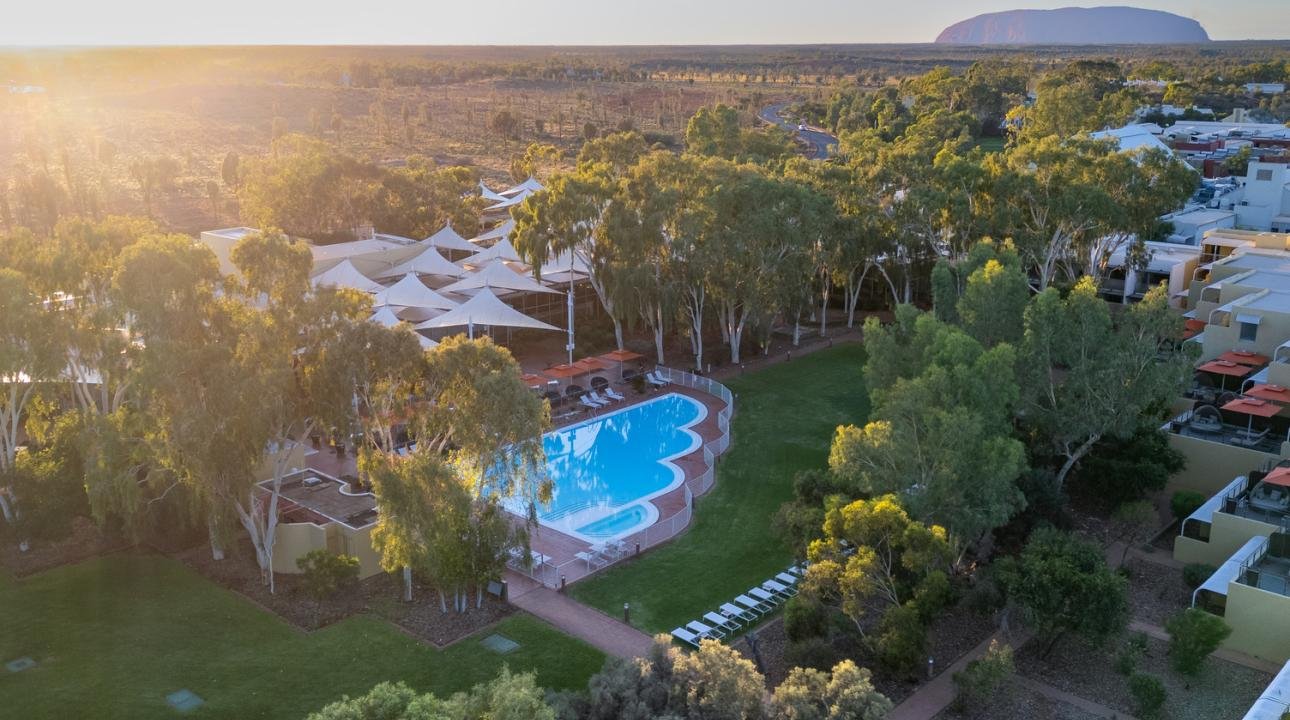
Sails in the Desert – Ayers Rock Resort
Sails in the Desert is a tranquil oasis in Australia's Red Centre, seamlessly combining modern luxury with the rich cultural heritage of the Anangu people, capturing the essence and spirit of this iconic landscape. Located close to Uluru, the hotel offers a peaceful retreat where contemporary design meets the timeless beauty of the desert. Guests are invited to immerse themselves in a truly unforgettable cultural journey, creating meaningful connections through shared, once-in-a-lifetime experiences.
Adjacent to the resort, you’ll find stores and galleries showcasing vibrant, high-quality Aboriginal artwork. Visitors may even have the chance to meet one of the resident artists featured at the Gallery of Central Australia, gaining unique insights into their craft and stories. The dedicated team at Sails can also arrange a range of enriching cultural activities, from bush food experiences and stargazing under the expansive Northern Territory skies to hands-on art workshops.
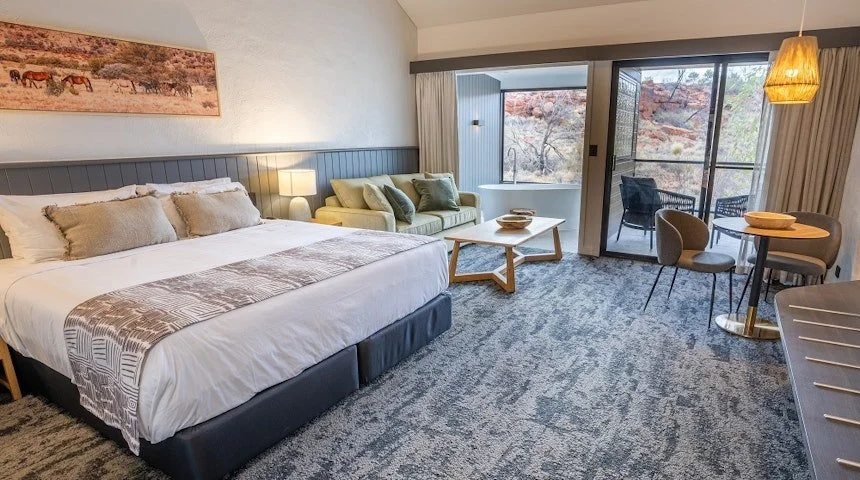
Discovery @ Kings Canyon Resort
Discovery Kings Canyon's Deluxe Cabin offers an inviting retreat in the heart of the Red Centre. Wake up to the calls of the crested bellbird and enjoy elegantly designed space that blend seamlessly with the rugged Northern Territory landscape. Each cabin features comfortable beds, premium linens, modern amenities, and a private ensuite, ensuring a relaxing stay.
The outdoor deck provides a perfect spot to sit under the stars, combining adventure with comfort. As the day winds down, the freestanding bath offer the ultimate way to unwind after exploring the breathtaking Rim Walk, surrounded by the beauty of the desert.


The Spirit of Finnish Modernism
The father of Finnish Modernism, architect Alvar Aalto, left an indelible mark on the landscape of his homeland with over 400 architectural projects scattered across Finland.
The father of Finnish Modernism, architect Alvar Aalto, left an indelible mark on the landscape of his homeland with over 400 architectural projects scattered across Finland. A journey through the south of the country reveals a series of his most iconic works, each blending form and function in ways that still feel visionary today.
Aalto Centre City Hall
Aalto was a design radical, constantly reinventing his Modernist style. His approach evolved to include experiments with materials, textures, and architectural forms, eventually embracing organic shapes inspired by Finland’s rugged landscapes. Aalto firmly believed that by harmonising with nature, one could cultivate a more humane society.
Functionalism, softened by humanist touches, defines Aalto’s style. His liberal use of natural materials—particularly wood—created a warmth and tactility that softened the often rigid lines of Modernism. In architecture, furniture, and glass design, he pioneered an approach that integrated the Finnish landscape, making his works sensuous and enduringly liveable.
Though Finnish architecture has evolved, Aalto’s legacy endures. His influence is evident across the country, where a deep connection to nature remains a cornerstone of design.
Jyväskylä: Aalto’s Hometown
Aalto’s hometown of Jyväskylä, 280km north of Helsinki, boasts more Aalto-designed buildings than any other city in the world. Here, one can trace his journey from classicism to functionalism, particularly on the University of Jyväskylä campus and at Säynätsalo Town Hall, where red-brick construction became a signature feature.
Aalto’s summer retreat, the Experimental House on Muraatsalo Island, offers a striking example of his penchant for innovation. Here, he played with different textures and materials, juxtaposing brick, stone, and ceramic against the stark whitewashed walls. This “building without foundations” was perched directly atop the natural rock, integrating it seamlessly with the landscape and featuring early experiments in solar heating—a concept well ahead of its time.
Nearby, the Alvar Aalto Museum reflects Aalto’s signature touch with a white-tiled façade that dances with light. Inside, skylights and a minimal design language create a space dedicated to Aalto’s architectural vision and interior design hosting exhibitions, workshops, and forums that keep Finnish Modernism at the cutting edge.
Where to stay: The family-run Boutique Hotel Yöpuu is the ideal retreat, offering individually designed rooms, some dedicated to Aalto himself. Enjoy the restaurant Pöllöwaari’s ‘Taste of Finland’ menu for a flavour of local cuisine.

Saynatsalo Town Hall
Seinäjoki: Aalto’s Civic Vision
The small city of Seinäjoki houses a collection of Aalto’s civic buildings, all within a compact, walkable area that draws architecture enthusiasts from around the globe. Aalto’s winning design for the city’s cultural and administrative centre, known as the Aalto Centre, is based on the concept of a forum influenced by Italian piazzas, blending monumental architecture with approachable public spaces.
At the heart of this district, the Civic Square is bordered by the Town Hall, Library, and Seinäjoki Theatre. Paved with granite and cobblestone, this space was designed for gatherings, fostering social interaction in a setting that promotes dialogue and a “new renaissance” of civic life. The library also houses the world’s largest collection of Aalto’s glasswork, designed by his wife, Aino Aalto, who co-founded the legendary design company Artek.
Where to stay: Hotel Alma offers the quintessential Finnish experience, including rooms with in-suite saunas in the new tower. Located next to the train station, Hotel Alma’s history dates back to 1909, making it both convenient and charming. While in Seinäjoki, a visit to the Lapuan Kankurit shop is a must for its unique blend of Nordic and Japanese-inspired design.
Travel Essentials
Finnair offers daily flights from London to Helsinki, with fares starting at £180 in Economy Class and £547 in Business Class. For more information and reservations, visit finnair.com.