
Kimpton Maa-Lai Bangkok Review: A Creative Luxury Hotel by Lumphini Park
Bangkok rarely slows down, and most hotels either lean into the chaos or try to shut it out completely. Kimpton Maa-Lai Bangkok finds a more interesting middle ground, offering a stay that stays connected to the city while giving you space to step back when needed.
Bangkok rarely slows down, and most hotels either lean into the chaos or try to shut it out completely. Kimpton Maa-Lai Bangkok finds a more interesting middle ground, offering a stay that stays connected to the city while giving you space to step back when needed.
Set beside Lumphini Park, this is a hotel that understands modern travel. You are not here to escape Bangkok, you are here to experience it on your own terms.
Location: One of Bangkok’s Most Liveable Pockets
Langsuan Road has quietly become one of Bangkok’s most desirable neighbourhoods. Central, but never overwhelming. With Lumphini Park just moments away, mornings shift quickly into something calmer, whether that is a run, a walk, or a slow loop on one of the hotel’s bicycles. It is a rare contrast in a city defined by movement.
Nearby, Chidlom and Siam cover shopping and galleries, while One Bangkok continues to reshape the area. Direct access to Velaa Sindhorn Village adds another layer, with cafés, restaurants and casual dining all within easy reach.
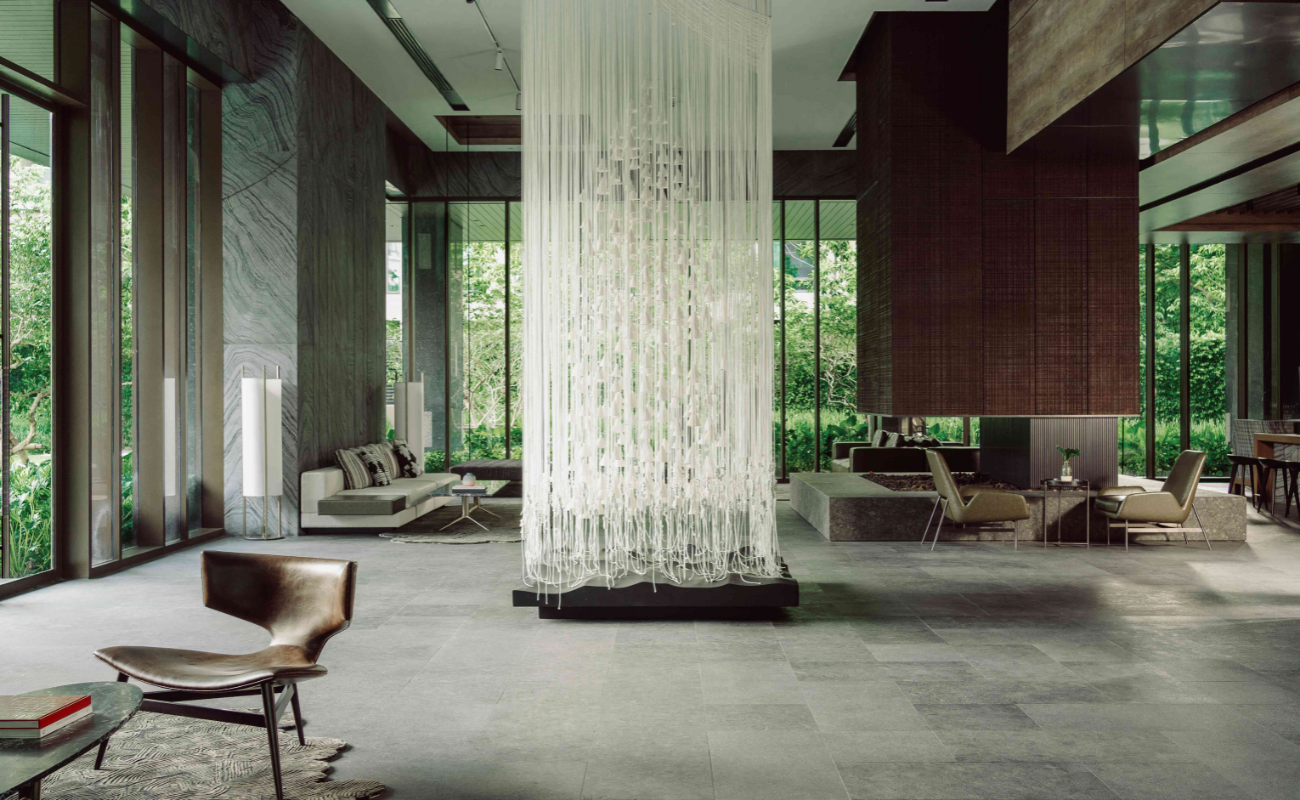
Mixed textures and sleek design welcome guests in the foyer
Design & Atmosphere: Bold, Social, Intentional
Designed by P49DEESIGN, the hotel strikes a balance between statement and restraint. The lobby sets the tone. Cracked black concrete walls, oversized proportions, layered textures and contemporary Thai artworks create a space that feels confident without becoming theatrical.
There is a looseness to how the spaces are arranged. Seating is generous, layouts are informal, and the overall atmosphere encourages you to stay a little longer than planned.
The Thai concept of lamiat, treating life as something to be carefully shaped and appreciated, runs quietly through the experience. You see it in the detailing, in the pacing, in the way the hotel invites interaction rather than isolation.
Rooms & Suites: Designed for Real Living
With 362 rooms, scale could easily overwhelm. Instead, the hotel leans into a more residential feel. Rooms are softly cocooning. Layered lighting, tactile materials and excellent soundproofing create a sense of separation from the city without disconnecting entirely.
Technology is well judged. Smart TVs, Nespresso machines, strong sound systems and small details like anti-fog mirrors and Dyson hairdryers all feel considered rather than excessive.
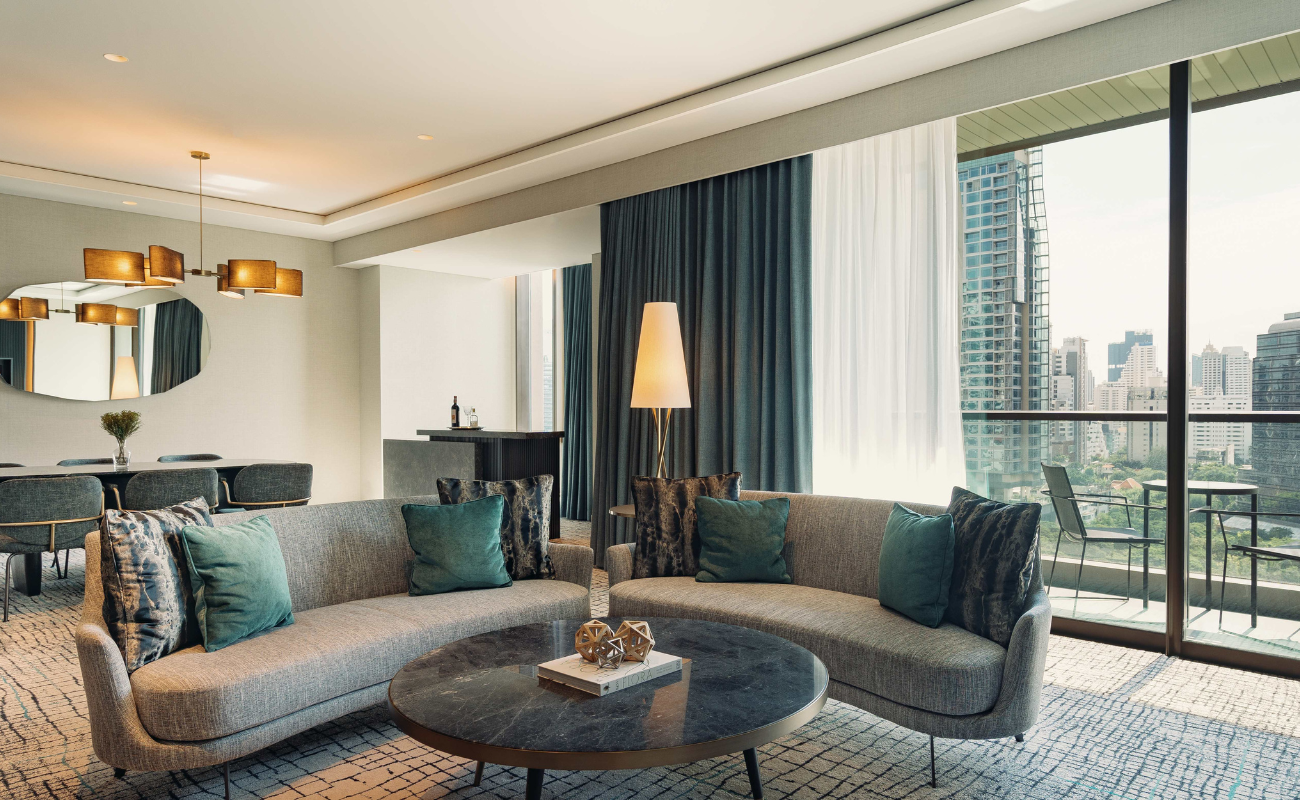
The large Embassy Suite with much-coveted balcony
Suites, particularly the Embassy Suite, shift things further. A proper living space, anchored by a marble table and relaxed seating, creates something closer to an apartment than a hotel room. Ideal for longer stays or simply slowing down between plans
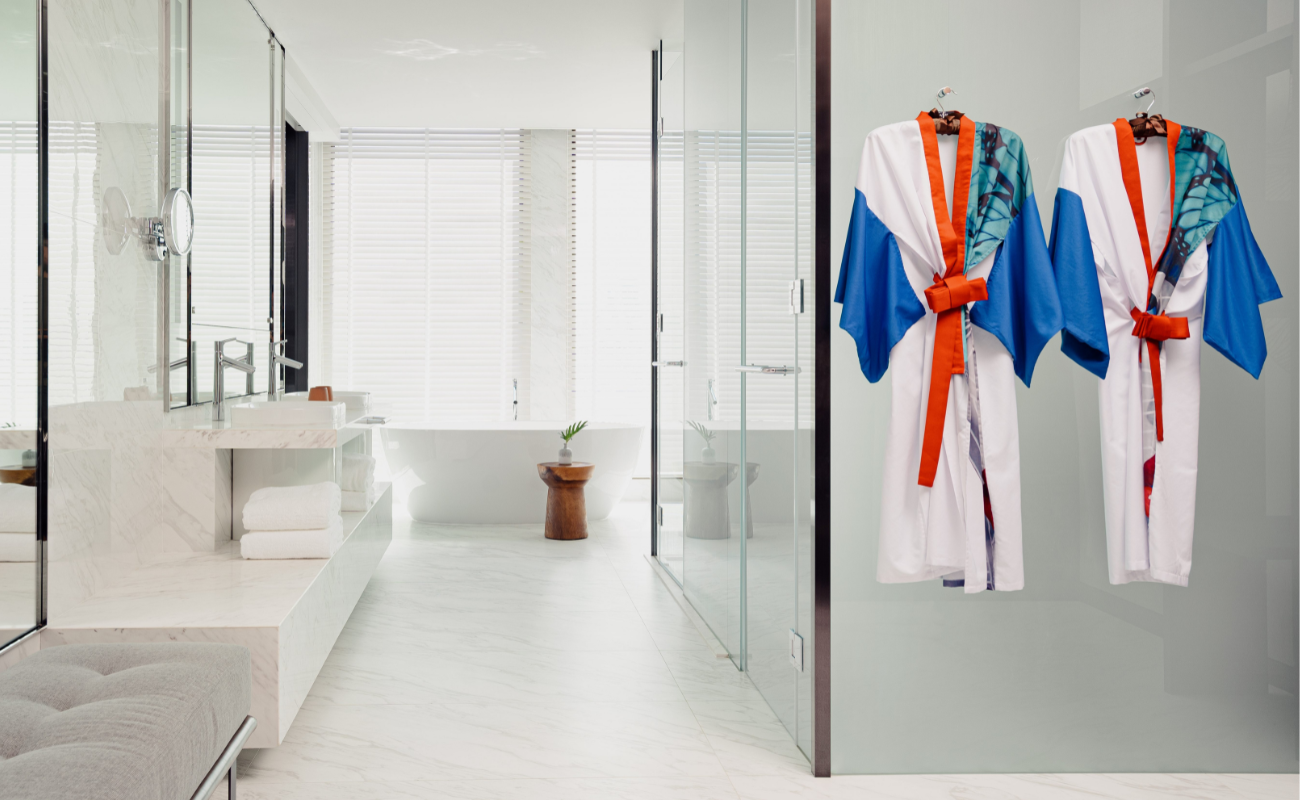
Roomy crisp white bathroom with deep soaking tubs
Bathrooms keep things minimal but generous, with rainfall showers, deep soaking tubs and a comprehensive amenities offering that covers more than expected.
Dining & Drinking: A Destination in Its Own Right
Few Bangkok hotels deliver this consistently across multiple venues. Stock.Room is the anchor. Part food hall, part market, part open kitchen experience, it turns breakfast into something more expansive. Six kitchens, an in-house roastery and a strong mix of Asian and Western dishes make it one of the most talked-about breakfasts in the city.
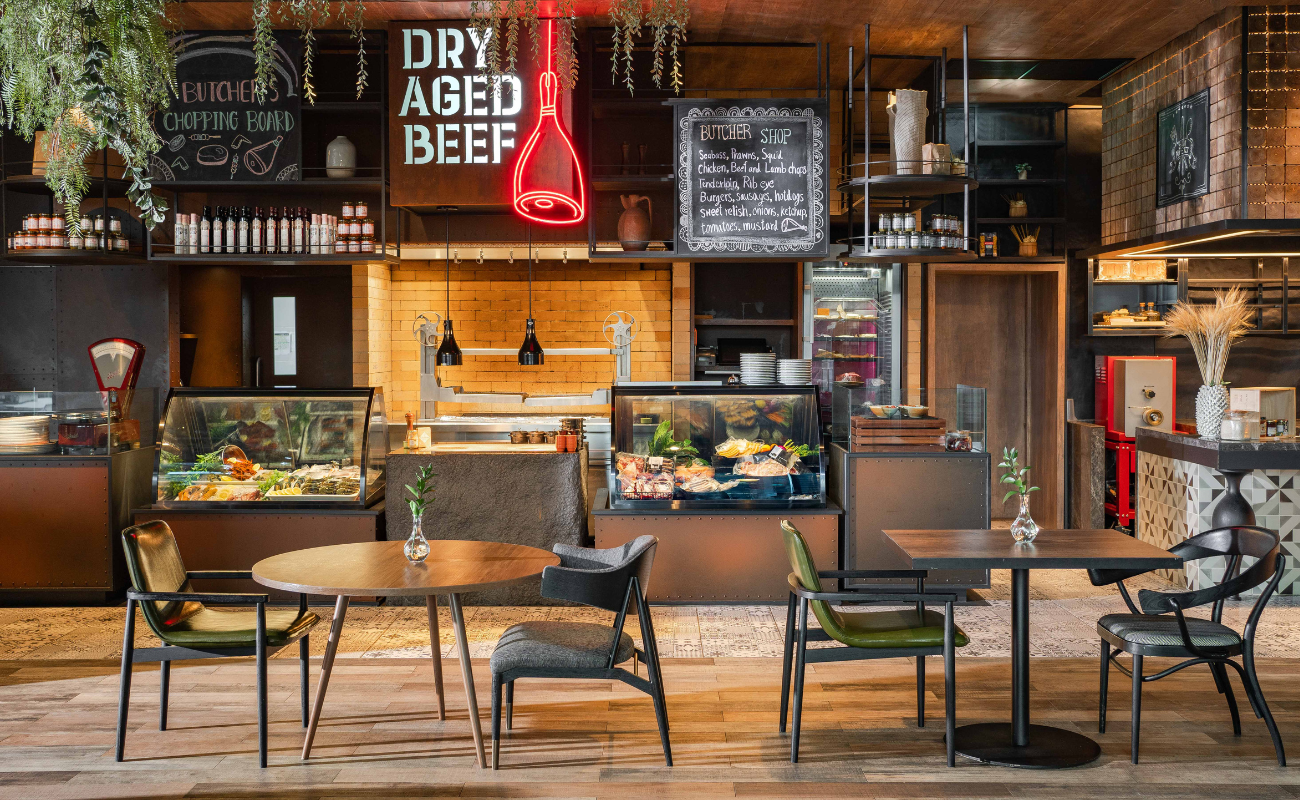
Stock.Room serving up the best breakfast in Bangkok
Ms.Jigger handles Italian dining with confidence, ideal for long lunches or slow evenings. Up on the 40th floor, Bar.Yard brings a completely different energy. DJs, skyline views and a Pan-Latin menu create a space that feels social and slightly unruly in the best way.
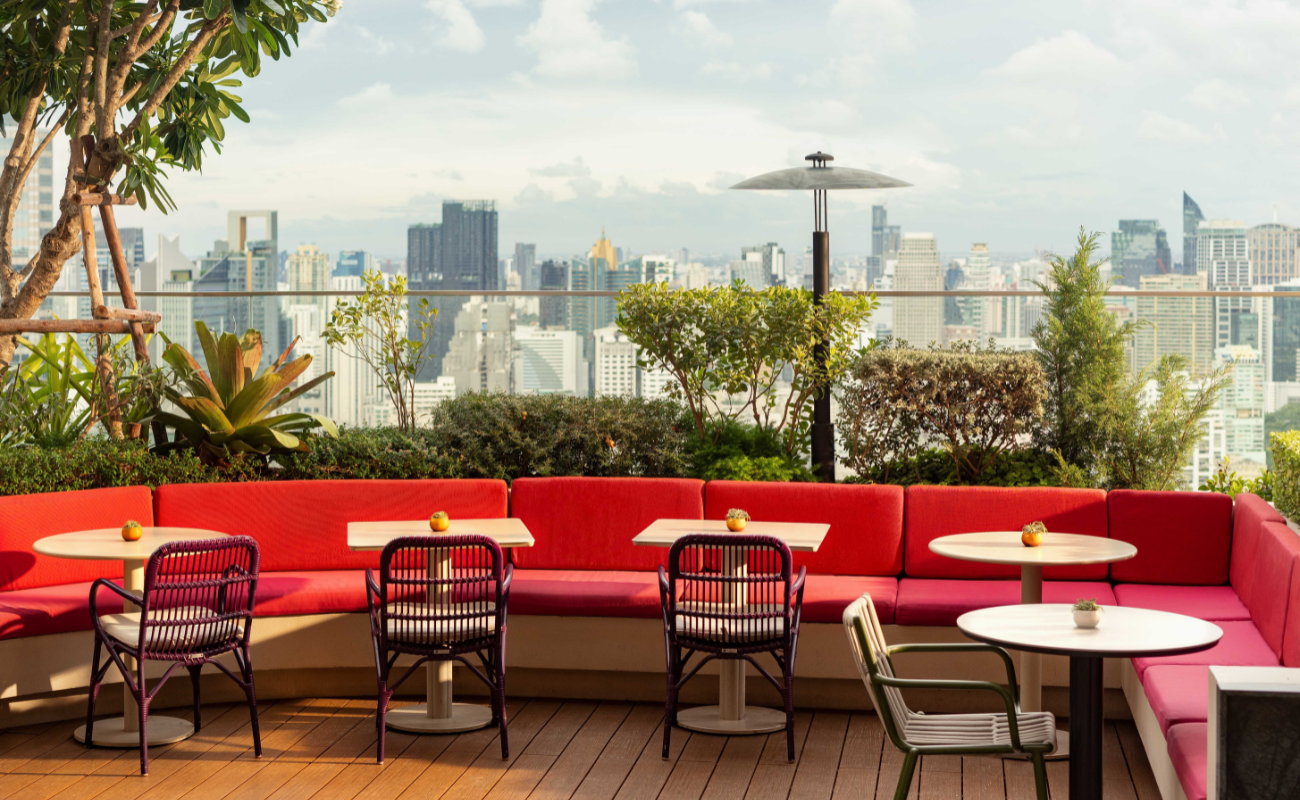
Bar.Yard serves up cocktails from the 40th Floor
At ground level, CRAFT has become a neighbourhood fixture. Coffee, casual dining and a steady flow of Bangkok’s creative crowd give it a life beyond the hotel itself.
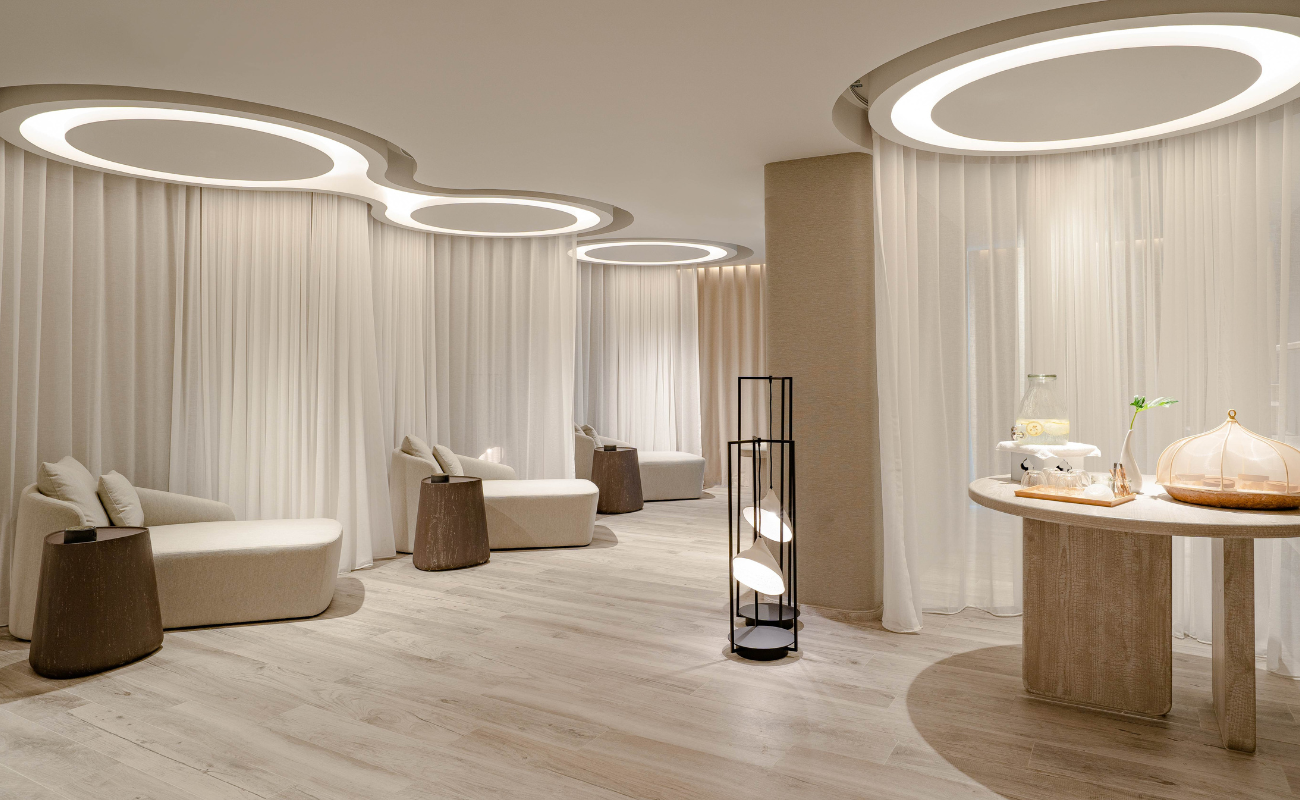
The spa is a relaxing escape
Wellness & Facilities: More Than an Afterthought
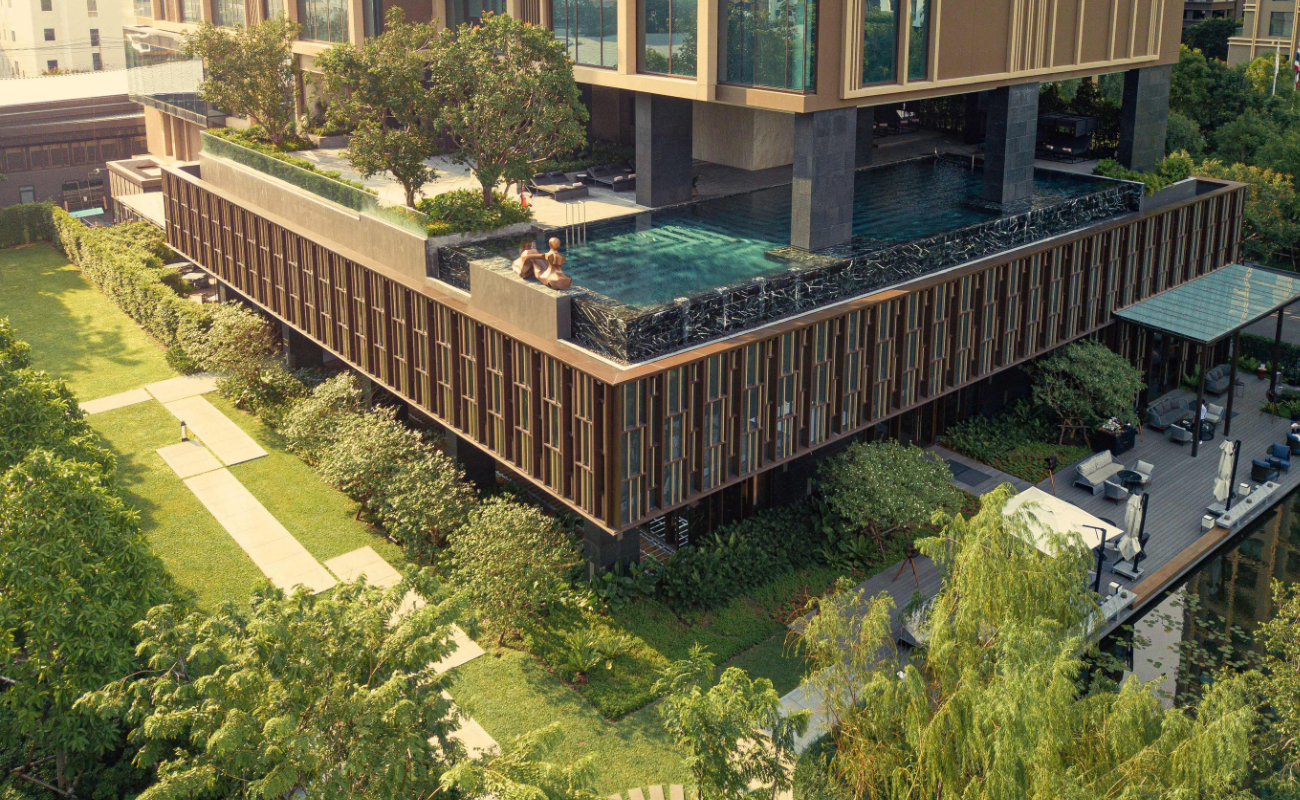
The third-floor infinity pool is one of the hotel’s strongest assets. Long enough for laps, partially shaded and surrounded by greenery, it feels more retreat than city.
The gym stands out. HYROX-affiliated and designed with performance in mind, it goes beyond the typical hotel offering. Classes range from Muay Thai to yoga, adding a structured wellness layer for those who want it.
The spa continues this approach. Treatments focus on restoration and balance, avoiding unnecessary complexity while delivering real results.
What Makes It Different
• A genuinely social atmosphere that feels natural rather than staged
• One of Bangkok’s strongest hotel breakfast offerings
• A rare balance between residential comfort and five-star service
• Direct access to one of the city’s most liveable neighbourhoods
• A pet-friendly policy that sets it apart in the luxury space
Who It’s For
• Creative travellers and design-conscious visitors
• Longer-stay guests who want a more residential feel
• Return visitors to Bangkok looking for something less conventional
• Travellers who want strong food, wellness and social energy in one place
The Verdict
Kimpton Maa-Lai Bangkok delivers a version of luxury that feels relevant. Social without being overwhelming, design-led without trying too hard, and connected to the city without losing its sense of calm.
A hotel that understands how Bangkok really works, and gives you the space to experience it properly.
Fact Box
Address: 78 Soi Ton Son, Lumphini, Pathum Wan, Bangkok
Rooms: 362 rooms and suites
Best for: Creative, design-led city stays
Nearby: Lumphini Park
Neighbourhood: Langsuan
Closest BTS: Chidlom
Andaz One Bangkok Review: An Art-Led Luxury Hotel Near Lumphini Park
Andaz One Bangkok positions itself differently, using contemporary Thai art and architectural references to shape something more layered than a standard luxury stay.
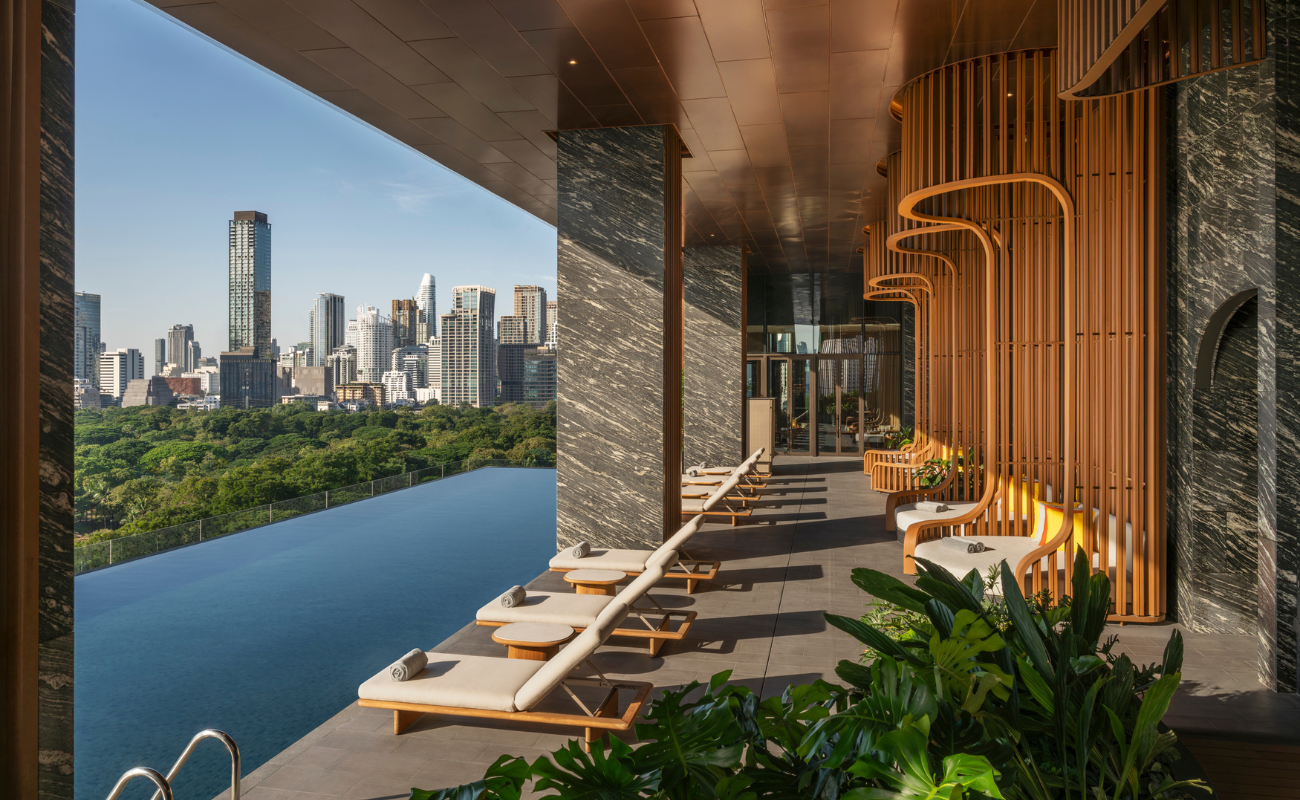
The 7th floor pool overlooks Lumphini Park
Bangkok doesn’t lack five-star hotels. What it lacks are hotels with a clear point of view. Andaz One Bangkok positions itself differently, using contemporary Thai art and architectural references to shape something more layered than a standard luxury stay.
Set just off Wireless Road, with Lumphini Park on one side and the glass-and-steel expanse of One Bangkok on the other, the setting already tells a story. Old Bangkok meets the new city, and the hotel quietly builds on that tension.
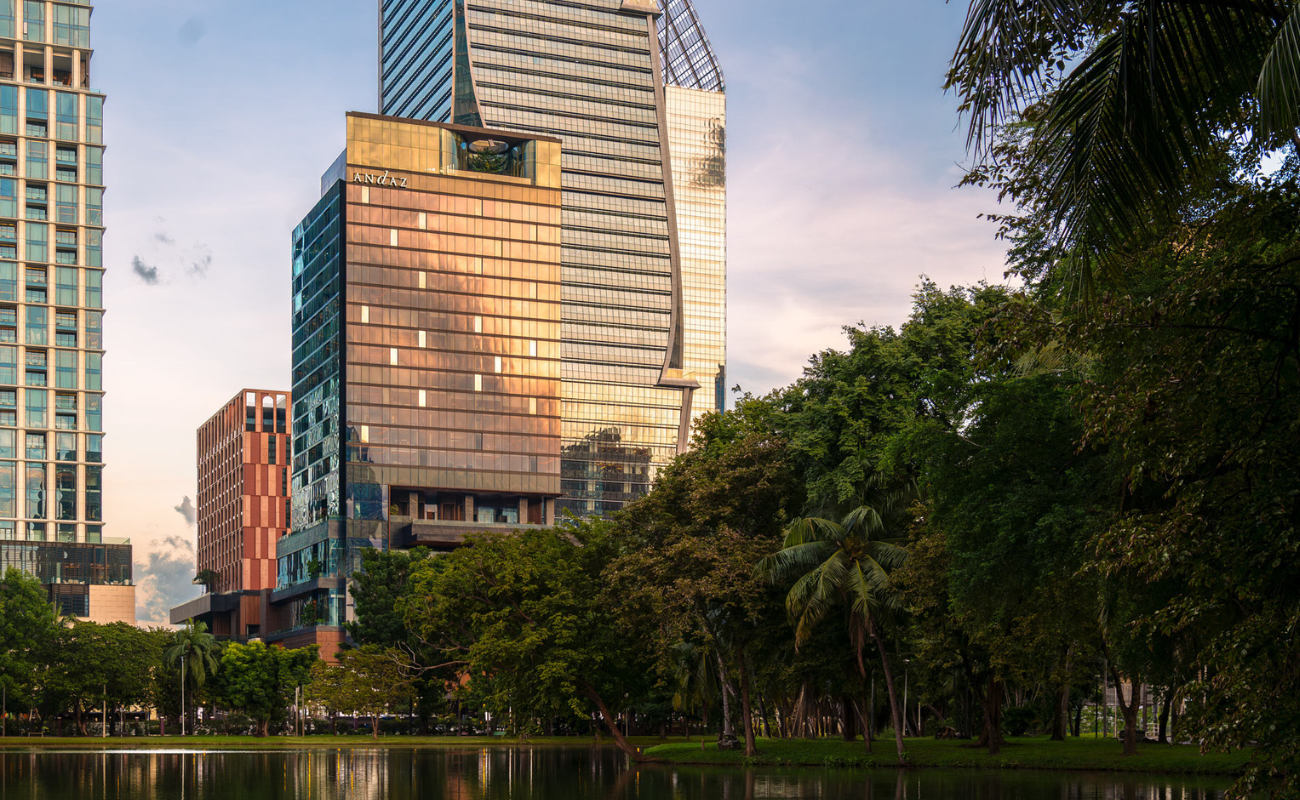
Andaz One Bangkok is part of a huge new expansion around Lumpini Park
Location: Between Park and City
Wireless Road places you in one of Bangkok’s most strategic pockets. Close enough to the business district, but softened by the greenery of Lumphini Park. It’s a location that works particularly well for first-time visitors and repeat travellers alike. You can move quickly across the city, then return to something that feels slightly removed from the pace.
Design & Atmosphere: Shaped by the Surroundings
Rather than leaning on familiar luxury tropes, the design draws from the history of the street itself. Wireless Road, once home to Bangkok’s first radio-telegraph station, becomes a subtle reference point.
Curves define the architecture. Arched doorways, rounded transitions, softened ceilings. There’s a clear nod to mid-century Bangkok, reinterpreted with a lighter, more contemporary hand. Materials move between marble, brass and dark wood, but the overall effect stays balanced. Details reveal themselves gradually, grilles referencing shophouse windows, partitions echoing traditional gates. Nothing feels overworked.
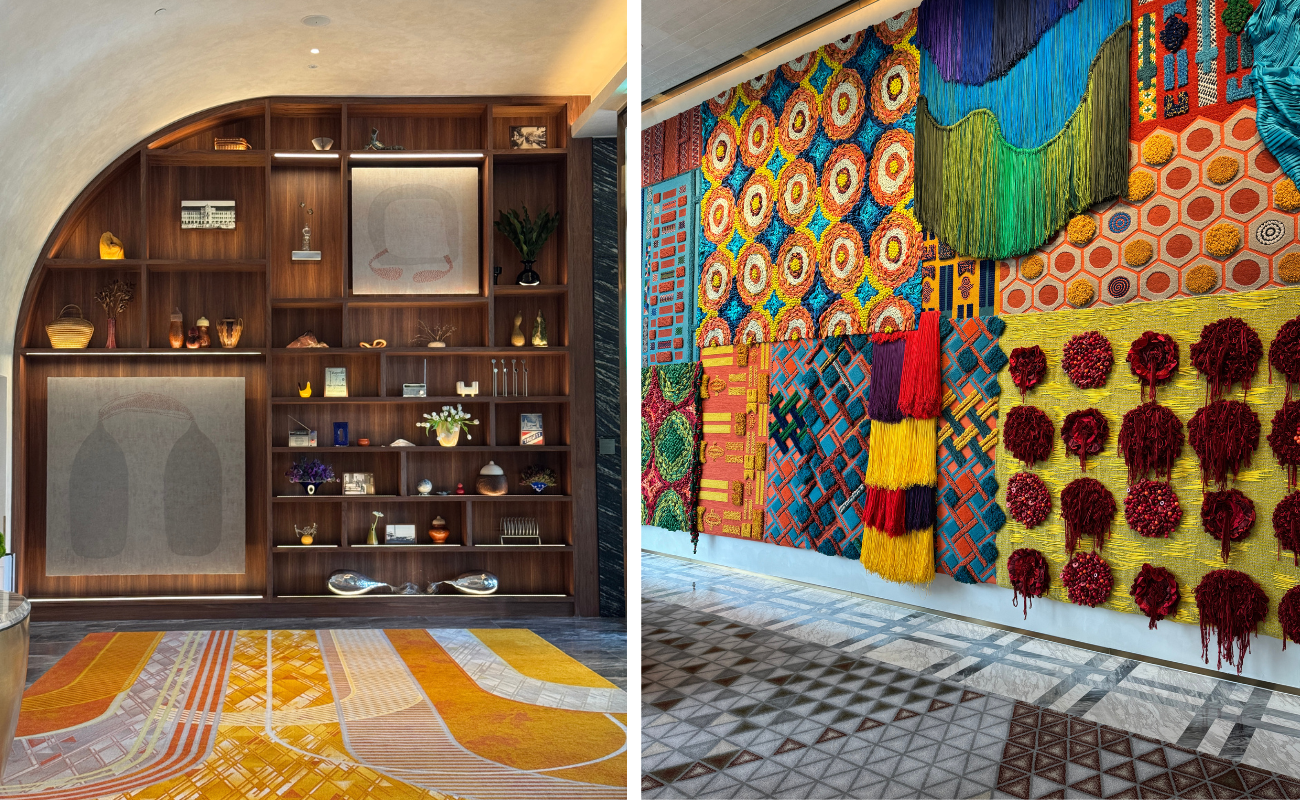
Stunning art commissions by female Thai artists are all around the property
Art & Cultural Identity: A Hotel Built Around It
Art is not an afterthought here, it’s the organising principle. The arrival space is anchored by Pocket of Nature, 2025 by Pinaree Sanpitak. A mixed-media installation inspired by Lumphini Park and the site’s history, it brings together her signature breast stupa forms in a composition that feels both personal and ceremonial.
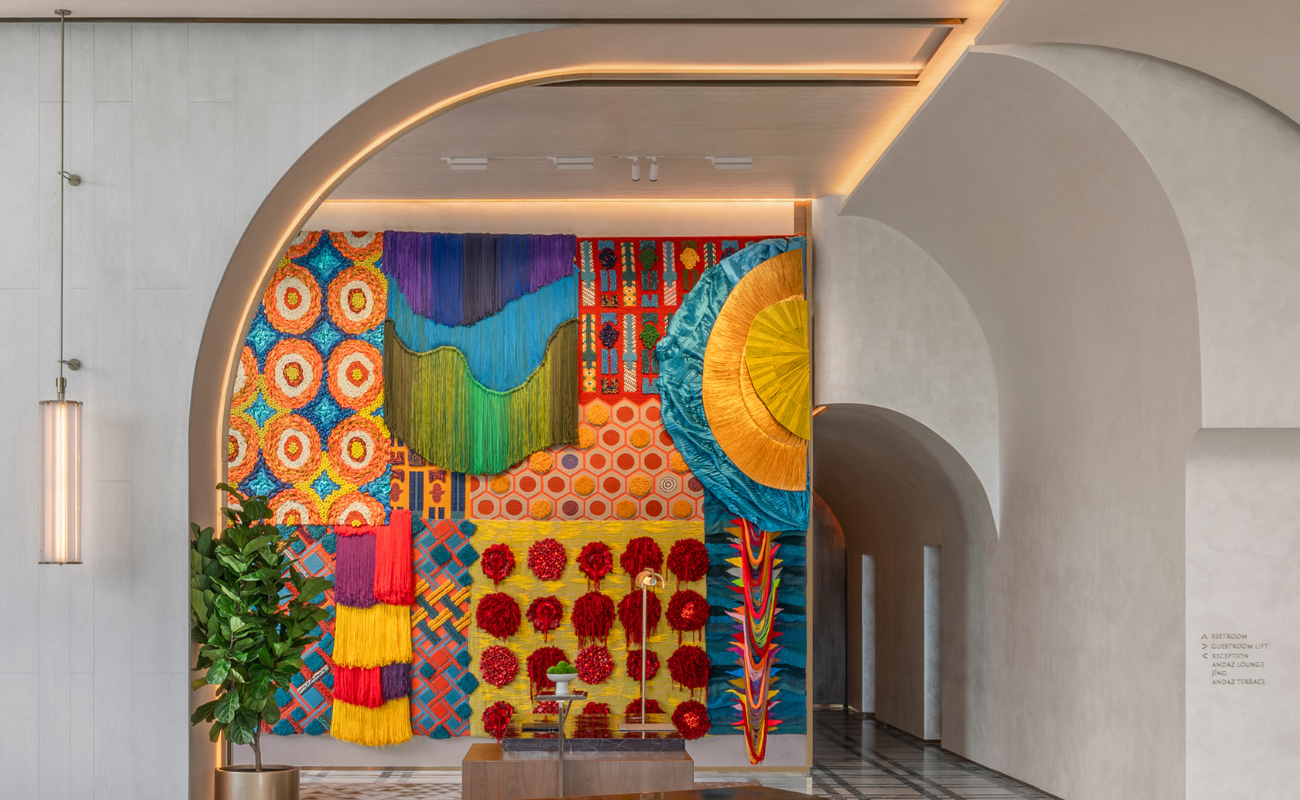
Blockwilt, 2024 is a stunning abstract representation of Bangkok by Ploenchan Vinyaratn
In the lobby, Blockwilt, 2024 by Ploenchan Vinyaratn shifts the energy entirely. A large-scale textile work in electric tones, referencing Bangkok’s overhead wires and surrounding architecture, it feels alive in a way most hotel art doesn’t.
Throughout the building, smaller interventions continue the thread. Sculptural pieces, unexpected placements, objects that feel chosen rather than installed. It creates a sense of continuity rather than decoration.
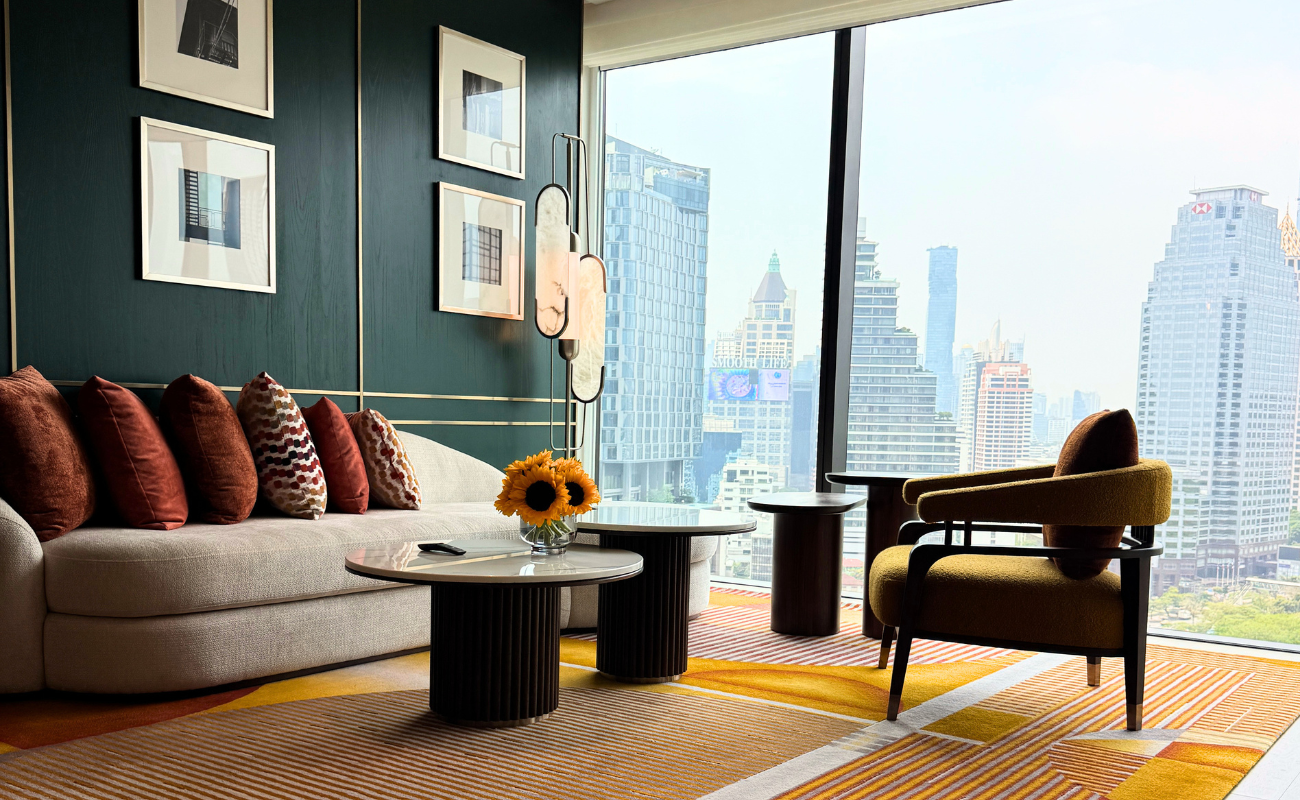
The colour palette is the perfect complement to the park
Rooms & Suites: Designed to Frame the View
The 244 rooms and suites carry the same architectural language, without pushing it too far. Mid-century references come through in the furniture, low-slung seating, circular tables, warm woods, balanced with a confident colour palette of mustard, burnt orange and deep green.
The real strength is the orientation. Many rooms face Lumphini Park, turning the view into part of the experience. Green foreground, skyline beyond, constantly shifting with light and weather.
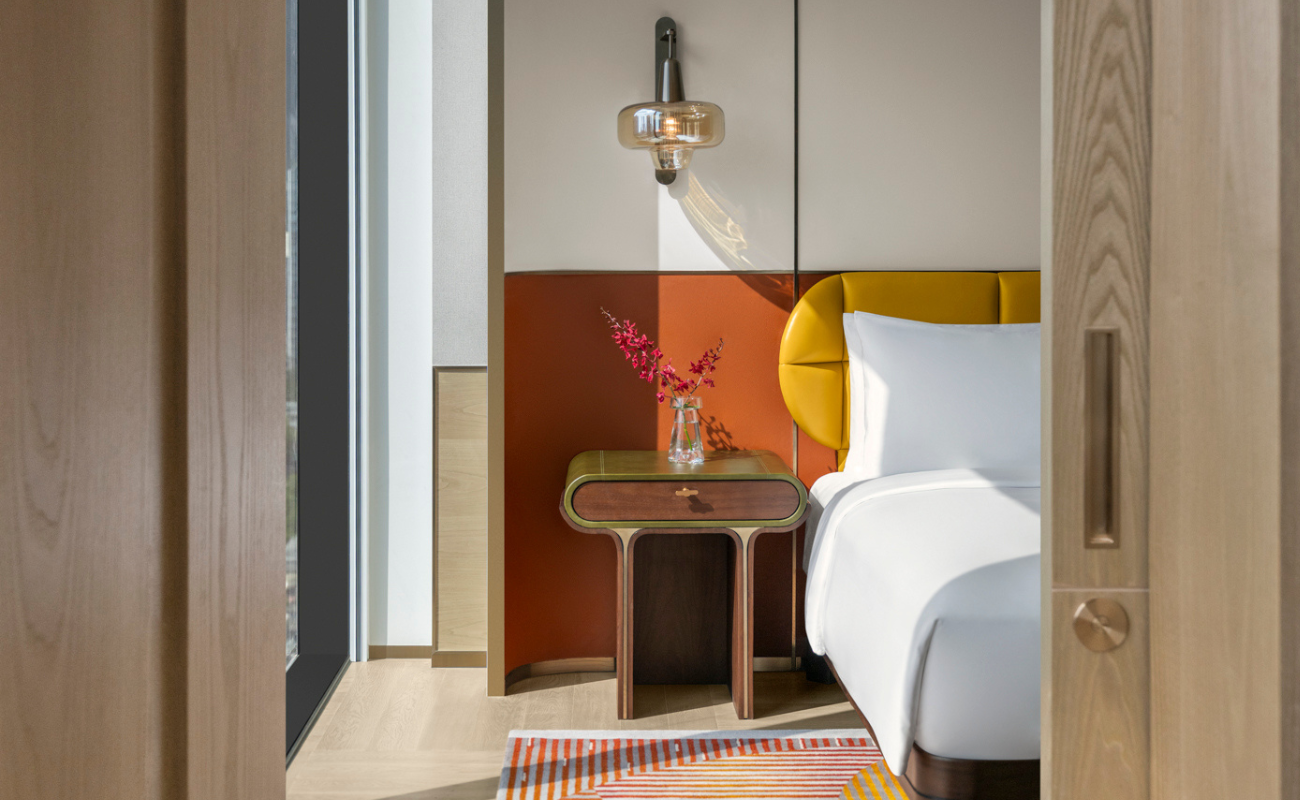
Curve design and pattern is a running theme throughout
Bathrooms lean into quiet luxury. Marble finishes, brushed gold, muted tones, with thoughtful additions like BYREDO amenities and Dyson hairdryers. Suites expand on this, offering more space and, in some cases, bathtubs positioned directly towards the park.
Dining & Drinking: Layered, Not Formulaic
Dining feels considered rather than standardised. Breakfast leans Asian, with dim sum, congee and local dishes alongside European options. The terrace, when open, is worth prioritising.
Jing focuses on Chinese cuisine with confidence, Cantonese and Sichuan dishes executed properly, with staff guiding choices.
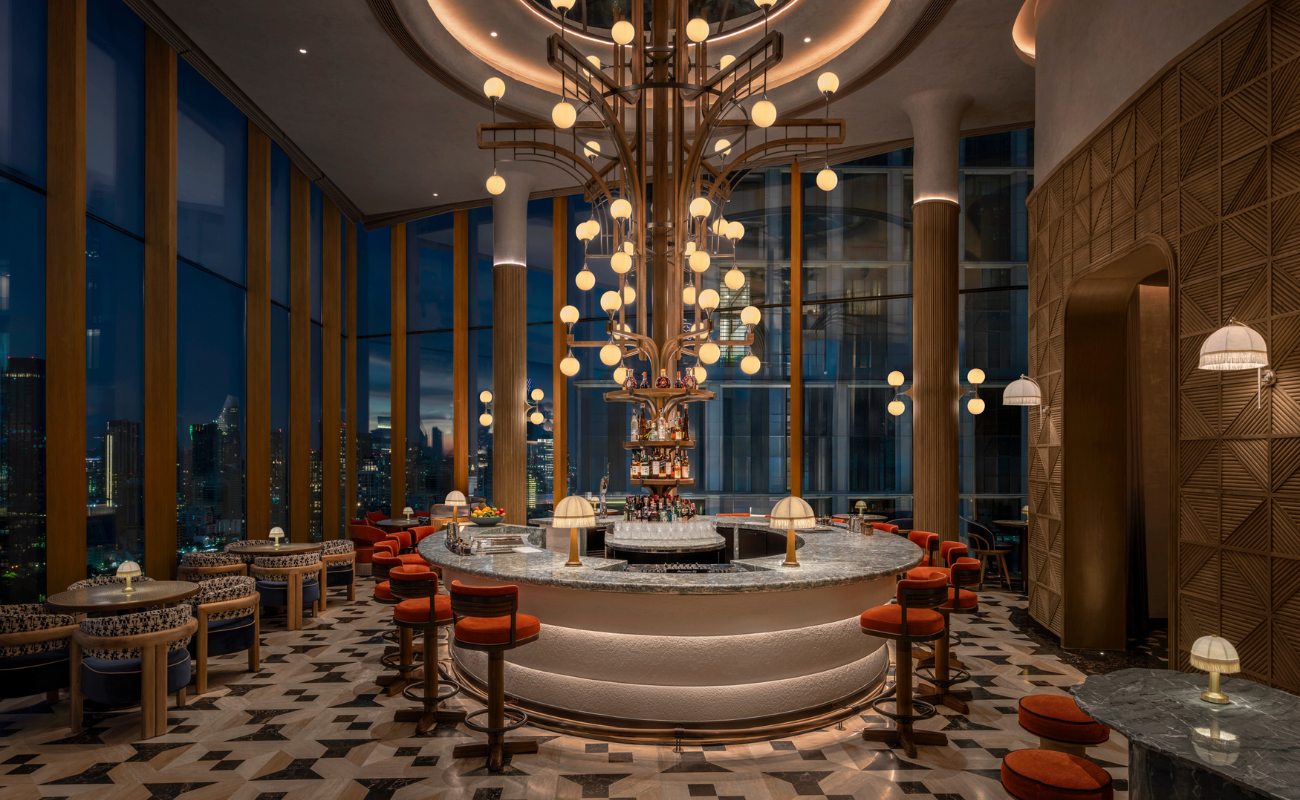
Piscari for the views
Piscari, set on the 23rd floor, shifts tone again. Mediterranean influences shape both the menu and interiors, with deep blues, warm lighting and panoramic city views. It’s as much about atmosphere as food.
Facilities: Where the Hotel Slows Down
The Andaz Lounge adds genuine value. Open to all guests, offering drinks, snacks and a daily wine hour, it feels relaxed rather than performative.
The seventh-floor pool is one of the hotel’s standout spaces. Overlooking Lumphini Park, lined with generous daybeds, it’s somewhere you settle into rather than pass through.
The gym is equally well considered. Large, properly equipped, and designed for actual use.
What Makes It Different
• A clear focus on contemporary Thai art, integrated from arrival to rooms
• Design rooted in Bangkok’s architectural history rather than generic luxury cues
• Park-facing rooms that genuinely elevate the stay
• A cohesive identity that runs through every space
Who It’s For
• Creative travellers interested in art, design and architecture
• Return visitors to Bangkok looking for something more considered
• Luxury travellers who prefer subtlety over spectacle
The Verdict
Andaz One Bangkok stands out not because it tries to impress at every turn, but because it knows exactly what it is. Drawing from the history of Wireless Road, the energy of the city and the calm of the park, it delivers a stay that feels both intentional and resolved.
A rare Bangkok hotel where art shapes the experience as much as the architecture.
Fact Box
Location: Wireless Road, Bangkok
Rooms: 244 rooms and suites
Best for: Art-led luxury city stays
Nearby: Lumphini Park
Closest BTS: Ploenchit
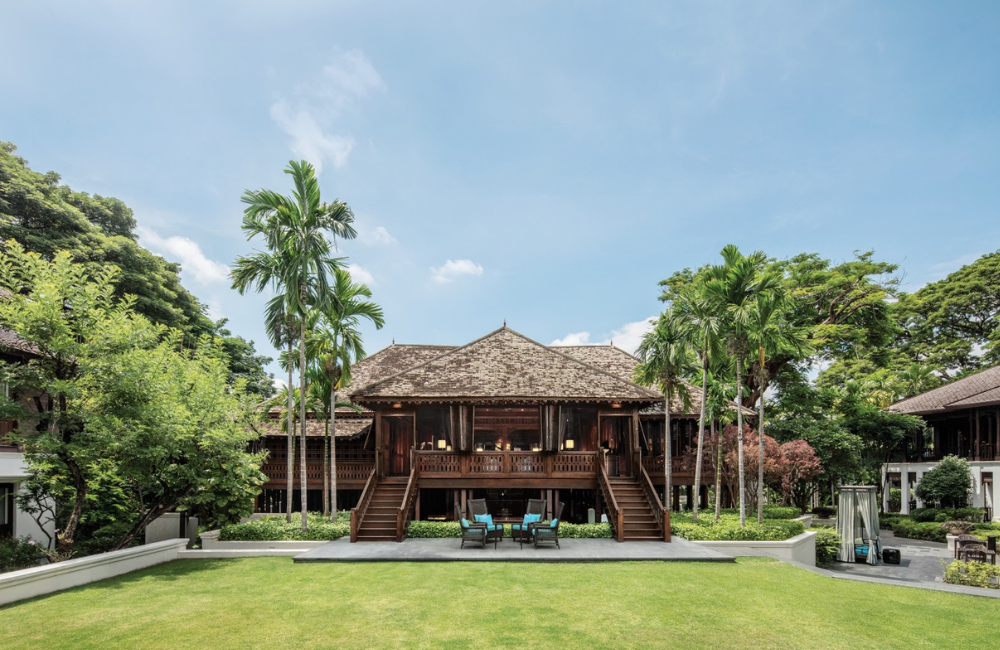
137 Pillars House, Chiang Mai: A Heritage Hideaway with a Contemporary Soul
Set on the east bank of the Ping River in the leafy enclave of Wat Gate, 137 Pillars House Chiang Mai feels deliberately removed from the city’s pace.
The centre point of the resort
A quiet counterpoint to Chiang Mai’s energy
Set on the east bank of the Ping River in the leafy enclave of Wat Gate, 137 Pillars House Chiang Mai feels deliberately removed from the city’s pace. This is Chiang Mai at its most composed, where the traffic hum softens into birdsong and the rhythm of the day slows to something far more considered. Despite its sense of seclusion, the old town, night markets and creative neighbourhoods remain within easy reach.

The resort pool is a peaceful haven
Design rooted in history
At the centre of the property sits a restored teakwood house that once served as the headquarters of the Borneo Trading Company, dating back to the late 19th century. Rather than turning it into a static relic, the hotel builds its identity around it. The structure now houses intimate dining spaces and a bar, while beneath it a small museum and gym are cleverly integrated into the original pillar foundations.
The wider grounds follow the same philosophy. Mature trees from the site’s earlier life provide natural shade, while a vertical garden wraps the 25 metre pool, creating a cocooned, almost cinematic sense of privacy. There is a quiet choreography to the space, sprinklers cutting through the afternoon heat, soft jazz drifting across the croquet lawn, nature and design working in tandem rather than competing.
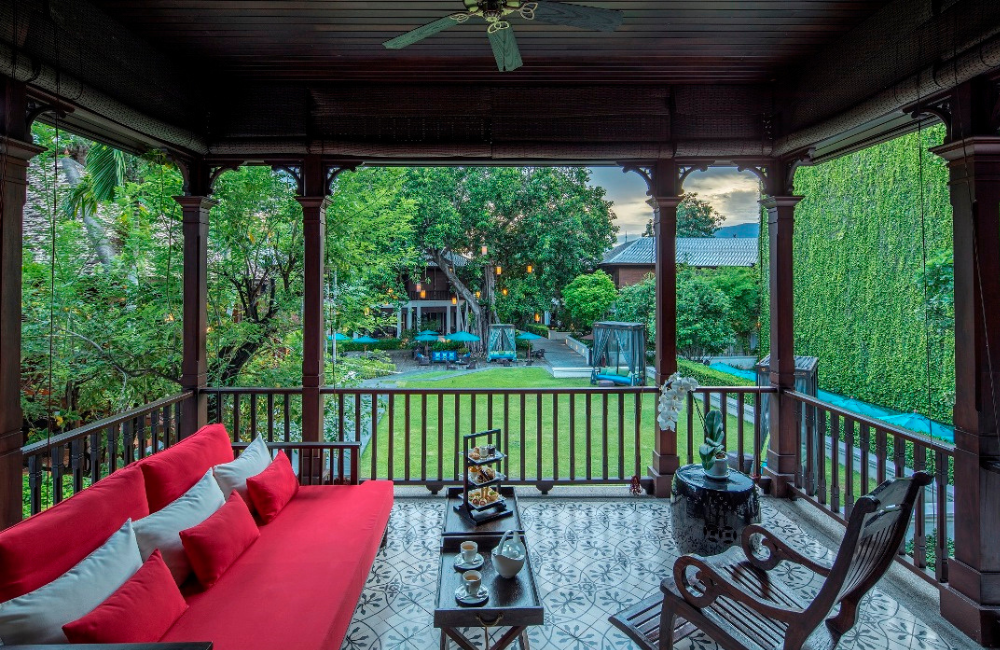
Outdoor terrace of the William Bain suite
Suites that feel like private residences
With just 30 suites, the hotel leans into a residential feel rather than a conventional resort layout. The William Bain Terrace Suites, positioned on the upper level, overlook the historic house and gardens, offering a layered view across the property.
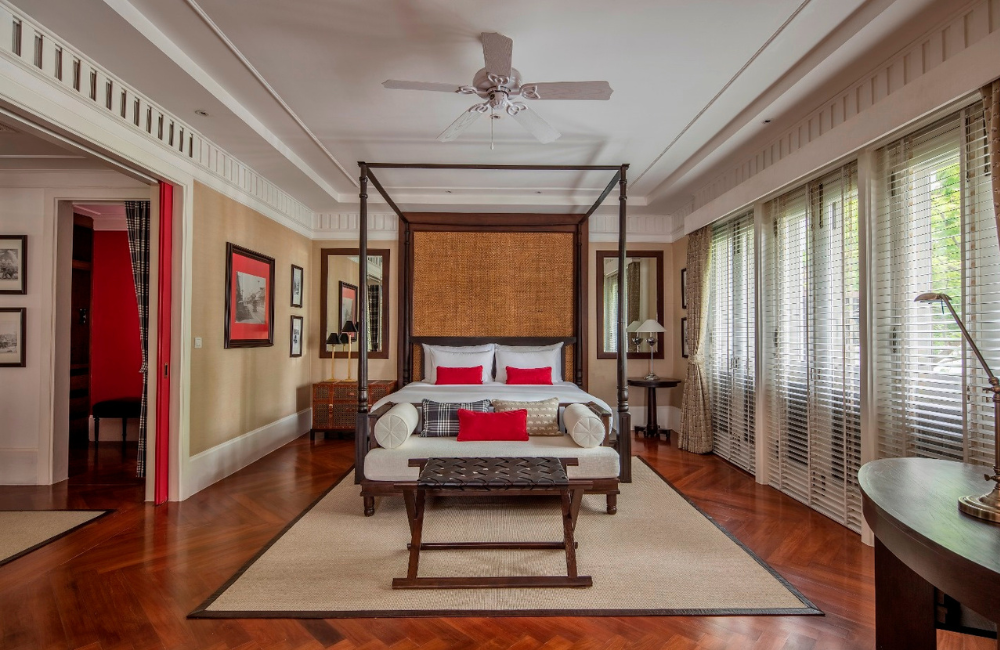
Tasteful heritage decor and ample space
Inside, the design balances heritage references with contemporary comfort. A super king bedroom opens into a separate living space, while outside a tiled terrace, complete with rocking chair and daybed, invites long, unstructured afternoons. Bathrooms are expansive, with sunken tubs framed by tropical planting and both indoor and outdoor showers adding to the sense of retreat. At around 100 square metres, these suites are less about short stays and more about settling in.
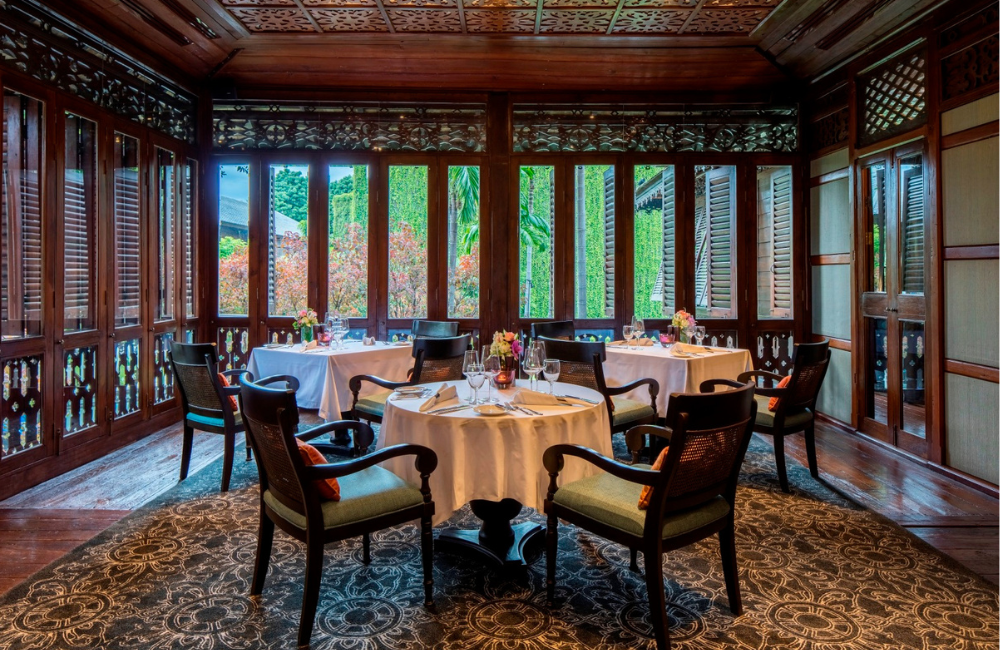
The Palette Restaurant is a perfect choice for an evening meal
Dining with a sense of place
Food here mirrors the wider tone of the hotel, refined but not overworked. The Dining Room, set just behind the main house, moves between northern Thai dishes and broader international options, served either indoors or in the garden.
For something more intimate, Palette Restaurant sits within the original house itself. With just a handful of tables and rotating works by local artists on the walls, it feels closer to a private dining experience. The menu leans Western, with a farm to table approach, while a live pianist adds a subtle sense of occasion.
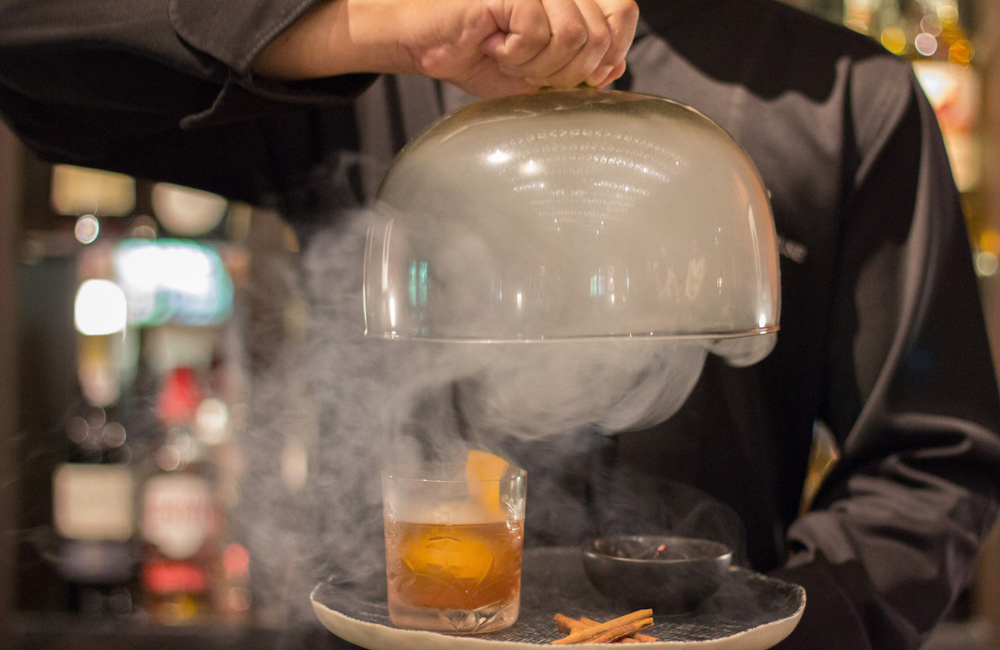
A smoked Old Fashioned at Jack Bain’s Bar
Jack Bain’s Bar, named after the building’s last resident, channels a colonial era aesthetic without tipping into pastiche. Deep leather seating, low lighting and a focus on crafted cocktails make it an easy place to linger into the evening.
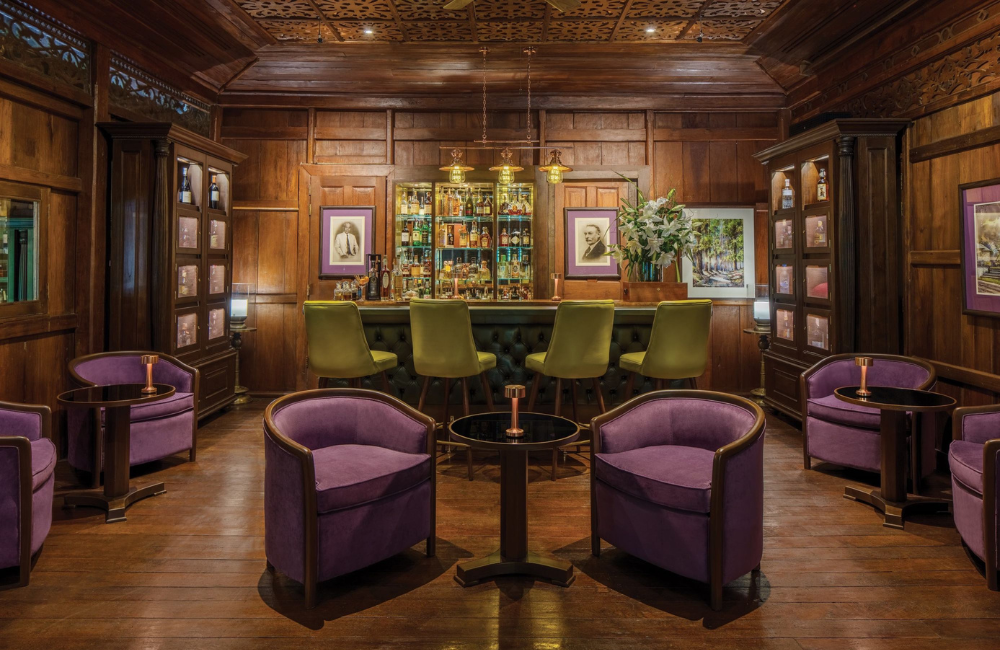
Colonial era stylings of the former trading company
A creative corner of Chiang Mai
Step outside and the neighbourhood reveals itself quickly. A short walk brings you to the riverfront, where small galleries, cafés and independent shops line the streets. Nearby, spaces like Elephant Parade Chiang Mai invite visitors to engage more directly, whether that’s painting ceramic elephants in support of conservation or browsing limited artist editions.
Beyond that, Chiang Mai opens up into one of Thailand’s most creatively rich cities, known for its craft traditions, design studios and night markets. From leather workshops to concept stores, it rewards slow exploration.
The verdict
137 Pillars House is not about spectacle. It is about atmosphere, restraint and a deep sense of place. For travellers drawn to design, heritage and a slower way of experiencing Chiang Mai, it offers something quietly distinctive.
BOOKING and GETTING THERE
To book at stay at 137 Pillars on selected dates click here.
We flew to Chiang Mai via Bangkok with Air Asia. You can see schedules, times and prices here.

Elegance on Track
Nestled in the heart of Thailand’s Khao Yai National Park, the Intercontinental Khao Yai Resort offers a luxurious and nature-centric retreat, blending opulence with natural beauty.
Nestled in the heart of Thailand’s Khao Yai National Park, the Intercontinental Khao Yai Resort offers a luxurious and nature-centric retreat, blending opulence with natural beauty.

Plunge pool and plenty of space to relax on your private terrace
As part of the IHG group, this stunning property was designed by renowned architect Bill Bensley. Bensley has expertly infused the resort with exquisite architecture and interior design that pays homage to the golden age of train travel while harmoniously integrating with the lush surroundings.

Beautiful carriage interiors
The resort’s accommodations epitomise comfort and eco-consciousness, featuring modern luxury with nostalgic travel motifs. Guests can choose from a wide range of rooms and private villas, including upcycled train carriages that have been transformed into luxury suites, each crafted to showcase breathtaking views of the surrounding mountains, forests, and lakes.

Somying’s Kitchen
Dining at the Intercontinental Khao Yai Resort is a culinary journey that caters to diverse palates. Guests can start their day at Somying’s Kitchen, a retro-chic diner featuring vibrant Formica surfaces and cool Tiffany-blue pleather seating. Highlighting the bold flavours of northeastern Thailand, dishes like fiery papaya salad, spicy curries, and the signature ‘Yang Sua’ Grilled Marinated Wagyu with tamarind sauce make for difficult choices during ordering.

The jazz-era-inspired Papillon Bar
For a more formal dining experience, the French brasserie Poirot, housed in a converted railway carriage across Swan Lake (yes, with real Swans), offers a refined menu reminiscent of first-class train travel. Next door, the jazz-era-inspired Papillon Bar is the perfect spot to unwind with timeless cocktails like Martinis and Negronis.
From misty mountain views and personalised park tours to starlit evenings, it’s the ideal blend of nostalgic charm, nature immersion and modern indulgence.
Rates start from £230 per night, including breakfast, making this a must-visit destination for those seeking a peaceful yet luxurious escape.